


- Boeing shares traded mixed Thursday as investors weighed the fragile US-Iran ceasefire against ongoing production delays and tariff headwinds.
- The truce lowers near-term oil prices (good for airline demand) but reduces urgency for missile defense spending (bad for Boeing's defense unit).
- $11.09 billion in order cancellations and supply-chain constraints continue to overshadow the PAC-3 missile deal.
Boeing is currently trading at $219.48, reflecting a modest gain of +1.68 (+0.77%) after opening at $216.00. The stock hit a high of $221.29 and a low of $216.00. However, the broader picture remains weak: BA has lost 9.2% over the past three months.
Overall, Boeing (BA) shares have been pinned down by a persistent downward trend and disappointing delivery hurdles that have left investors waiting for a credible turnaround signal.
Geopolitical ceasefire and supply-chain disruptions
The primary weight on Boeing’s valuation today is the volatile geopolitical landscape and its impact on global trade. Despite the U.S. and Iran agreeing to a two-week ceasefire, the situation remains fragile, keeping energy and transportation costs elevated. Given that the aircraft manufacturer already struggling with a shortage of critical parts, any continued disruption to global logistics acts as a significant headwind.
Furthermore, the introduction of heightened U.S. tariffs on imported steel and aluminum has raised input costs for the 777X, 737, and 787 models. Competitors like RTX Corporation and Lockheed Martin have seen gains due to steady defense contracts, but Boeing’s commercial segment remains vulnerable to the ongoing trade tensions between the United States and China.
Boeing outlook for Q2 2026
The outlook for the second quarter of 2026 remains cautious, as the company’s recovery depends on its ability to navigate a “fragile” global supply chain and the outcome of the current ceasefire. Boeing stock trades at a Forward P/S of 1.71X, but investors remain skeptical given the company’s negative return on invested capital (ROIC).

Analysts will be watching the April 28 earnings reports of other industry players for clues on how the broader sector is absorbing increased material costs, but Boeing’s path to recovery remains steep as long as regional conflicts threaten global demand.
Boeing (BA) key technical levels to watch:
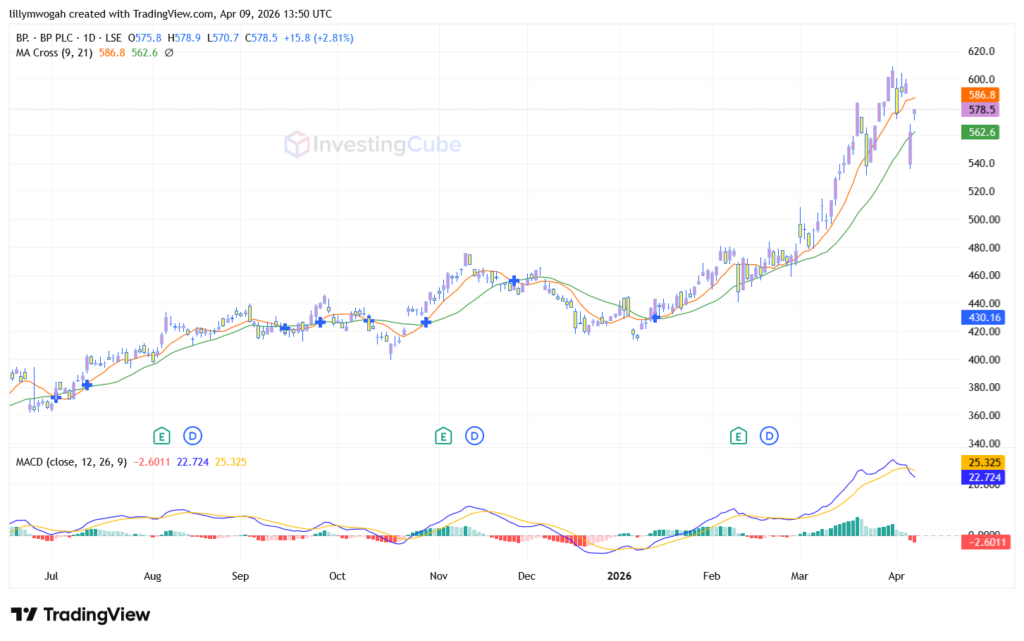
- Support: $205.99 This level, aligning with the 9-period Moving Average, represents the immediate floor where the stock has previously found buyers.
- Invalidation: $180.00 As long as the price remains above this multi-month low established in late 2025, a gradual recovery remains technically possible.
- Resistance: $219.48 The stock is currently testing this structural pivot; a sustained close above this level is required to shift the bearish narrative.
- Next Target: $240.00 If the price clears the current resistance, the 21-period Moving Average near $235 serves as the next major hurdle.
Conclusion: Ceasefire offers little relief for BA
Boeing finds itself at a crossroads where solid order activity is being undermined by operational inefficiencies and war-related market jitters. The U.S.-Iran ceasefire has provided a temporary reprieve for global indices, but the underlying threat of military escalation and trade tariffs continues to pressure Boeing’s margins. Until the company can demonstrate a consistent ability to meet delivery timelines without further cancellations, the outlook for BA shares remains gloomy.
While the ceasefire has temporarily calmed global markets, the ongoing threat of war continues to disrupt supply chains and keep material costs high, which negatively impacts Boeing’s production timelines.
Boeing has lagged behind companies like RTX and Lockheed Martin due to persistent production delays, a shortage of aircraft parts, and significant order cancellations totaling over $11 billion.
The fragile truce has a two-sided effect: lower oil prices help airline demand, but reduced missile defense urgency could hurt Boeing’s PAC-3 seeker revenues if the ceasefire holds.