


- The Nikkei Index is down again after a sharp spike on Wednesday, and the Middle East war is once again responsible for the disruption
- The Index declined by more than 13% in March, declining sharply from record highs near 60,000 points reached in late February
- Rising crude oil prices have forced the BoJ to take monetary policy positions that are divergent from the ideal
On February 26, the Nikkei 225 climbed to all-time highs of 59,332.43, then dropped, shortly after attacks by the United States and Israel on Iran. March brought heavy losses, wiping away around 13%. A jump of 5.24% followed on April 1, 2024, marking one of the biggest daily rises ever, yet confidence faded fast. So what’s happening?
Why Is the Nikkei Struggling?
The index began its downward spiral following the conflict between U.S.-Israeli forces and Iran in late February. Japan’s reliance on energy imports means the surge in Brent crude prices above $115 per barrel directly impacted corporate profit margins. The recent gain was likely driven by hopes of a ceasefire, yet the following decline indicates that optimism alone isn’t enough to stabilize the market.
Until a diplomatic agreement is confirmed, the Nikkei will continue reacting strongly to global oil price developments. Domestic data has also contributed to the cautious mood. Softer industrial production numbers, as reported in the Nikkei Asian Review, have compounded concerns.
Meanwhile, the yen’s occasional strength as a safe haven has hurt export-focused companies, which form a significant part of the index. This mix has led to volatile swings, as tentative recoveries fueled by de-escalation prospects are often followed by renewed selling when uncertainty persists.
Is This Really a Crash?
While many believe this marks the start of a prolonged downturn for Japanese equities, the situation may be more nuanced. A 13% monthly decline is substantial, but it follows a near-record high close to 60,000 in February. The downside scenario assumes ongoing conflict keeping oil prices above $100 per barrel and forcing the Bank of Japan to tighten policy more aggressively. However, this isn’t guaranteed.

On the other hand, a ceasefire could trigger a significant drop in energy prices, which would improve earnings visibility for Japanese exporters and financial firms.
Nikkei Index Forecast
The Nikkei 225 is currently battling to maintain its medium-term uptrend. The most critical floor sits at 51,235, a level that has successfully reversed downward pressure since January. A secondary support exists near 50,500. On the upside, the index faces immediate friction at 53,400 and a psychological ceiling at 54,000.
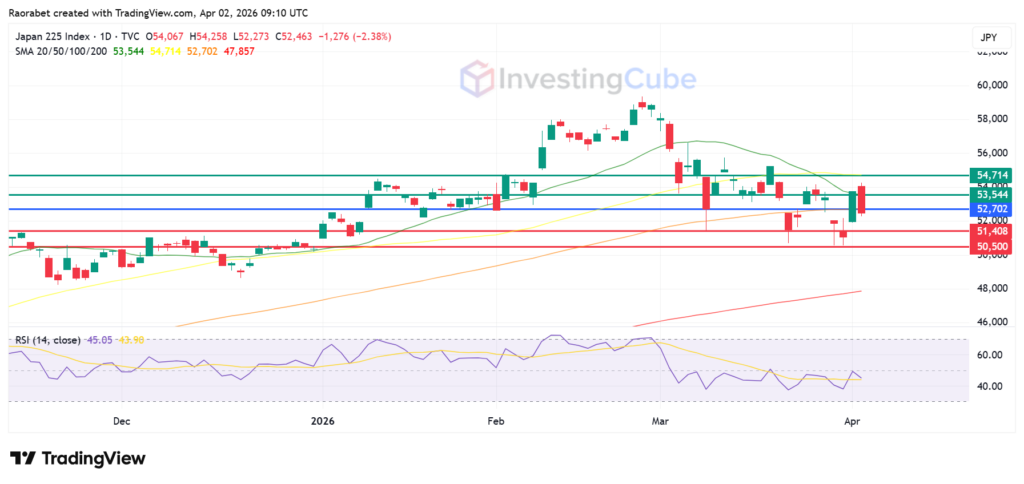
Nikkei Index daily chart on April 2, 2026 with the key levels of resistance and support. Created on TradingView
The decline was primarily driven by geopolitical conflict in the Middle East, which pushed Brent crude oil prices above $115. This increased costs for Japanese industries and sent the Yen past the 160-per-dollar intervention threshold.
Not necessarily, but it was highly reactive. It was sparked by ceasefire hopes. Today’s 2.38% dip proves that without a verified peace agreement, the market remains susceptible to sudden, news-driven reversals.
No. Even though the stock market is volatile, fundamentals like wage growth and corporate capital spending at home are still strong. The bumpy ride we’re on right now is mostly because of shocks to the geopolitical situation outside of the country, not because of problems with the domestic economy.