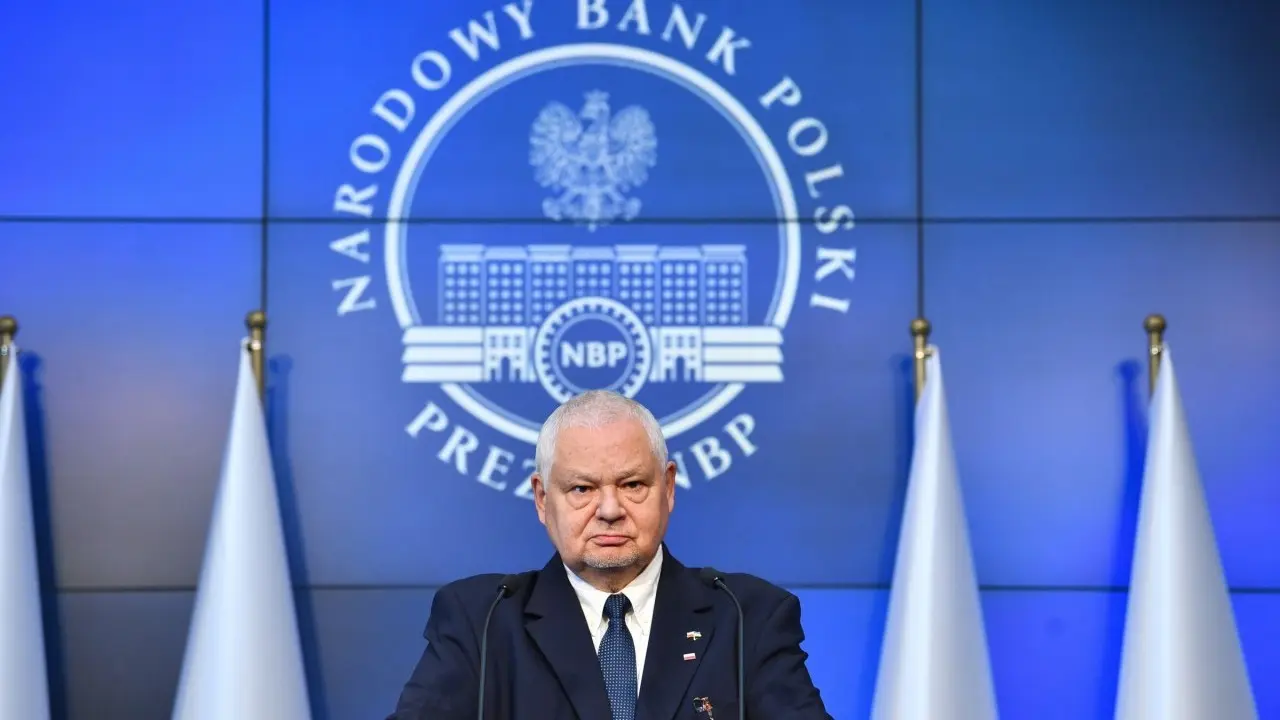
- USD/PLN trades steadily near the 3.50 handle as markets digest the National Bank of Poland's (NBP) recent decision to hold rates at 4.00%.
- Polish inflation fell to 2.4% in December, landing within the central bank's target range and bolstering Zloty stability.
- Analysts point to a "tug-of-war" between supportive domestic growth and global risks, including potential US tariff impacts and regional geopolitics.
The USD/PLN starts the trading session this Wednesday, January 28, hovering around the 3.49–3.50 region. While the pair has seen periodic volatility, the broader trend for the Zloty (PLN) in early 2026 has been one of resilience. This stability is largely driven by a combination of a “wait-and-see” approach from the National Bank of Poland and a robust domestic economic outlook.
Despite mixed global sentiment, the path for the Zloty remains supported by healthy GDP forecasts and the continued inflow of EU funds, which are expected to underpin investment activity throughout 2026.
NBP Monetary Policy and Zloty Interest Rate Advantage
A key pillar of the Zloty’s strength is the current stance of the National Bank of Poland (NBP). In its first meeting of 2026 held on January 13-14, the Monetary Policy Council (MPC) decided to keep the benchmark interest rate unchanged at 4.00%. This pause follows a cumulative 175 basis points of easing in 2025.
Think.ing.com has noted that while inflation has dropped to 2.4%, well within the NBP’s target of 2.5% ±1 percentage point. Governor Adam Glapiński remains cautious. The Council cited potential risks such as fiscal policy, wage growth, and global commodity price shifts as reasons to maintain current levels. This “higher-for-longer” relative stance compared to other regional peers provides a carry advantage that supports the PLN against the Dollar.
Polish Economic Growth Forecasts for 2026
The fundamental backdrop for Poland remains among the strongest in Central and Eastern Europe (CEE). GDP growth is projected to reach 3.5% to 3.6% in 2026, driven by a recovery in private consumption and a significant surge in EU-funded investments.
However, external headwinds persist. The EBRD has highlighted that US trade policies and a slowdown in Germany, Poland’s largest trading partner, could weigh on export demand.
Additionally, recent investigations into the circumvention of EU sanctions involving transport vehicles through Poland underscore the ongoing geopolitical complexities the region faces.
USD/PLN Technical Analysis: Testing the 3.50 Pivot
From a technical perspective, Key Psychological Level is the 3.5000 handle is currently the most significant pivot point.

- Support: 3.50, then 3.48, then 3.45
- Resistance: 3.506 to 3.51 first, then 3.55, then 3.59 (mid-band zone)
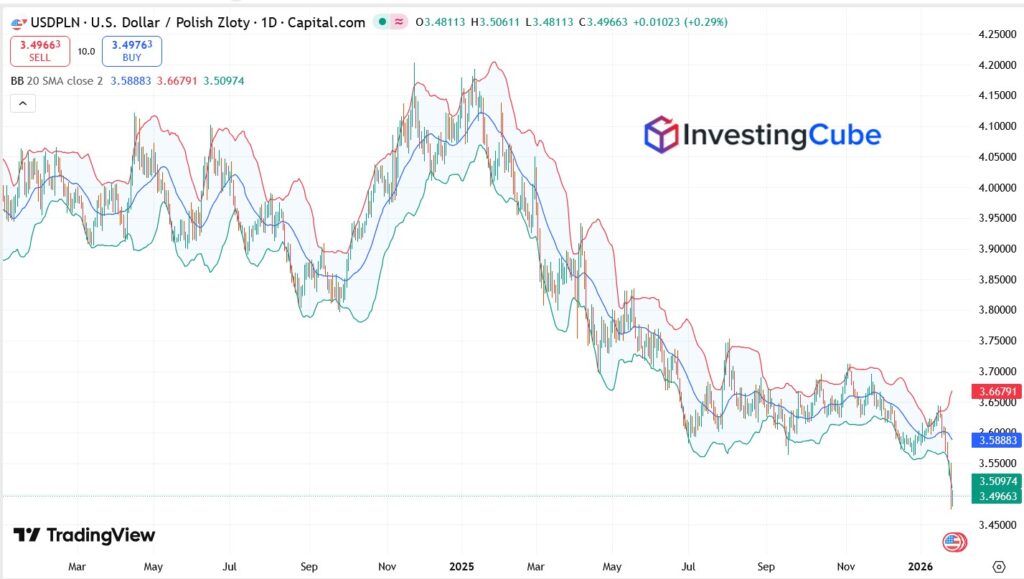
If USD/PLN cannot reclaim 3.51 on a daily close, the chart keeps the pressure on 3.50 and below. If it reclaims 3.51 and holds, a short squeeze back toward the mid-3.50s becomes more realistic.
Writer’s Trade Idea: My preferred strategy is to look for short opportunities on rallies toward 3.53, targeting a return to 3.48, with a stop-loss above 3.56.
Outlook: Stability Expected Amid Regional Tensions
Looking ahead, the USD/PLN is expected to remain relatively stable throughout the first quarter of 2026 as the market narrative around Poland remains relatively constructive compared to the broader Europe headline noise. While the NBP may resume rate cuts as early as March, many of these moves are already “largely priced in” by the market.
The main risks to this stable outlook remain external. Any sudden escalation in regional conflict or a hawkish shift in Federal Reserve rhetoric could trigger a flight to safety, momentarily boosting the USD/PLN. For now, however, Poland’s improved macro stability and robust growth profile make the Zloty a preferred choice among emerging market currencies.
Most analysts, including those from UBS, predict stability or modest appreciation, with USD/PLN forecasts holding around the 3.50–3.53 range for much of the year.
The primary risks include global risk aversion, potential trade tariffs from the US affecting the Eurozone, and any unexpected spikes in energy prices that could reignite inflation.
While the NBP held rates at 4.00% in January, some market participants expect the easing cycle to resume in March 2026, coinciding with the central bank’s updated inflation projections.