
- Japan's January CPI data showed that the nation is still struggling to steer inflation towards the BoJ's target
- Geopolitical risks in the Middle East raise the yen's safe haven status and could limit USD/JPY upside
- Leadership changes at the Fed and Japan's February snap elections are expected to inject significant momentum
This week’s yen movement has been a real back-and-forth between market speculation and the Bank of Japan’s (BoJ) actual stance. After a tough period from January 23-27, the dollar bounced back, bringing the USD/JPY pair down to intraday highs of around 154.39 during the European session on January 30, 2026.
BoJ Minutes Trigger Yen Weakness
The BoJ’s December meeting minutes, released Wednesday, were a major factor. The minutes showed the central bank is increasingly worried about a weak yen driving up domestic inflation. While the BoJ held rates steady at 0.75% this month, the minutes suggested they’re ready to raise rates again if the economy stays on track.
The Federal Reserve also played a part. FOMC members voted to keep interest rates steady at 3.5% – 3.75% this week. Plus, their statement after the meeting mentioned a rosier view of the economy, suggesting they’re not in a hurry to cut rates. Also, weak Japanese economic data put pressure on the yen. Tokyo’s main CPI inflation fell to 1.5% year-over-year in January, down from 2.0%, while core inflation dropped to 2.0% from 2.3%.
Speculations about who might lead the Federal Reserve also boosted the dollar. Reports that Kevin Warsh, seen as favoring tighter monetary policy, was a leading candidate for Fed chair helped the dollar index rise by 0.45%, with USD/JPY up 0.55%.
Near-Term Disruptors to the Dollar
The biggest threat to a dollar recovery right now is political. Prime Minister Sanae Takaichi’s government has been clear about wanting to defend the yen to protect consumer spending. If Japan teams up with other G7 countries to intervene in the currency market, the dollar could drop sharply over several weeks.
Also, if the Fed hints at a more flexible approach because of weak manufacturing data, the interest rate gap that’s been helping the dollar would shrink, giving the yen more room to gain. Global tensions, such as problems between the US and Iran, could make the yen look like a safer investment.

Lastly, trade tariffs under President Trump, like those on goods from Canada, could push up US prices and slow growth, which could help the yen indirectly. Plus, Japan’s snap election in February adds to the uncertainty and could delay plans to tighten monetary policy. However, the dollar has the upper hand for now, backed by U.S. Treasury Secretary Scott Bessent’s assertion that a “strong dollar policy” is in place and shutting down rumoured interventions to strengthen the yen.
USD/JPY Prediction
The USD/JPY pair has immediate support at the 200-day EMA at 152.07, with a stronger support level at 151.00. On the other hand, the first resistance is around 154.70, beyond which the pair could target the 50-day EMA. The RSI is at 40 but rising, which signifies strengthening bullishness.
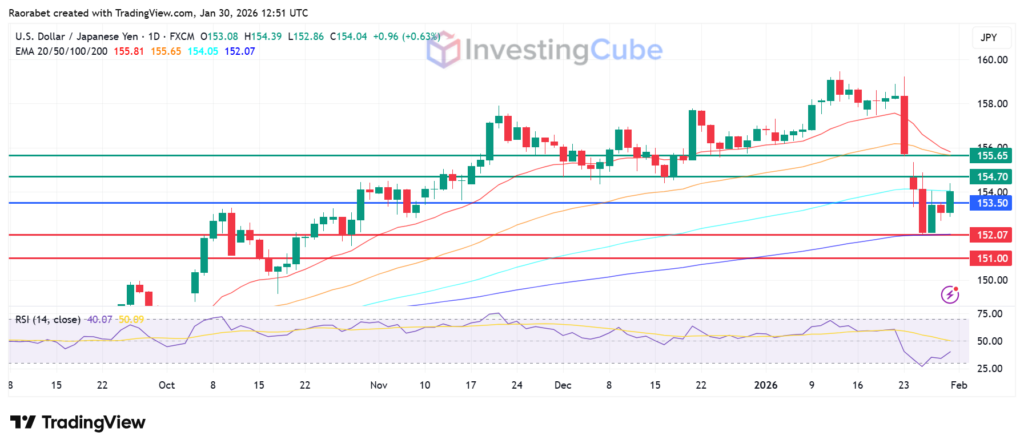
USDJPY currency pair on the daily time frame on January 30, 2026 with key support and resistance levels. Created on TradingView
The Fed held interest rates at 3.5%-3.75% and said the economic outlook was improving. This suggested rates might stay higher for longer, meaning the dollar would keep its yield advantage over the yen.
Possible currency intervention, US-Iran tensions making the yen look safer, and Trump’s tariffs pushing up US prices could all stop the dollar from gaining.
Yes. Bank of Japan meeting minutes show officials are increasingly concerned about inflation. If they indicate a rate hike sooner than expected, the yen could strengthen and interrupt the dollar’s current rise.