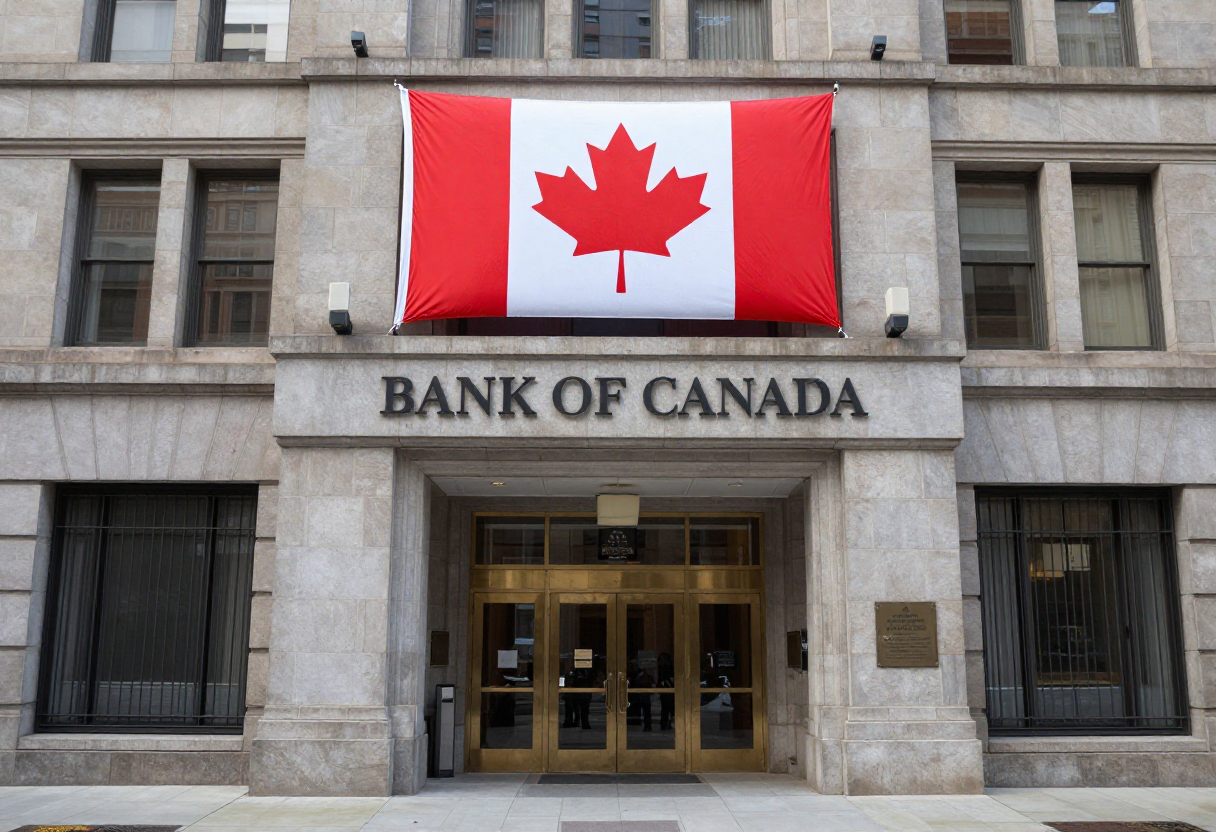
- The USD/CAD pair dropped sharply from mid-January but has risen by more than 1 percent since January 30
- US Treasury Secretary Scott Bessent last week issued a hawkish statement for the dollar, and the newly-nominated Fed chair is also seen as hawkish
- The Canadian dollar also faces downward pressure as oil prices drop on the back of negotiations between the United States and Iran
After dropping to lows not seen since September 2024, the USDCAD pair has bounced back. Starting January 30, 2026, the pair recovered almost 1% in one session, making people question if the Canadian dollar’s strong run is over. Currently, the pair is still climbing, trading around 1.3636 as of this writing. This move interrupts a trend of Canadian dollar strength, prompting us to consider what’s behind the change.
Why USDCAD is Rising Again
The rebound seems to be driven by both US policy statements and Canadian central bank decisions. Treasury Secretary Scott Bessent’s statement supporting a strong dollar helped the USD and other pairings, including USDCAD. At the same time, the Bank of Canada kept its key rate at 2.25%, which was expected and reinforced a stable view that limited Canadian dollar gains.
Also, there’s the nomination of Kevin Warsh as the next Federal Reserve Chair has sent a hawkish ripple through the markets. Mr. Warsh is perceived as someone who might push for a stricter, potentially longer-lasting, interest rate approach. This has pushed investors to rethink the big Fed rate cuts they had been expecting for 2026.
Then, there’s the energy market. Oil prices, as measured by Brent crude, fell more than 5% at the start of February. Crude is now around $65.96 per barrel as traders watch US-Iran talks. Because Canada is a major oil exporter, the loonie usually moves with energy prices. When oil falls, the Canadian dollar usually follows.
Is This a Real Reversal?
Whether this is a short-term dip or the start of a new uptrend depends on how the Bank of Canada (BoC) and the Fed diverge. Even though the BoC is staying steady at a neutral 2.25%, the Fed is still somewhat restrictive.
Elsewhere, with the USMCA review coming up later in 2026, any news about tariffs or trade exemptions will cause volatility for the pair. Without trade risks, the Canadian dollar is on a good path because of economic recovery and policy differences. A lasting reversal is possible if US data continues to support the dollar. If US jobs data keeps exceeding expectations, the USD could continue to recover.

USDCAD In the Coming Weeks
In the coming weeks, central bank policies and trade developments will be key. Expected rate cuts by the Federal Reserve, maybe one or two in 2026, could create wider differences that favor the CAD if the BoC stays put. Commodity prices, especially if oil rebounds with tensions, will support the CAD, while strong US economic numbers could strengthen the USD.
USDCAD Forecast
The USD/CAD pair pivots at 1.362 and the MACD’s recent narrowing with the signal line shows that the near-term momentum favours the buyers. The forex pair’s immediate hurdle is at 1.3686, beyond which the Volume Weighted Moving Average (VWMA) at 1,375 will likely be the next target. On the downside, primary support is at 1.3579. If the bears strengthen further, they will target 1.3534.
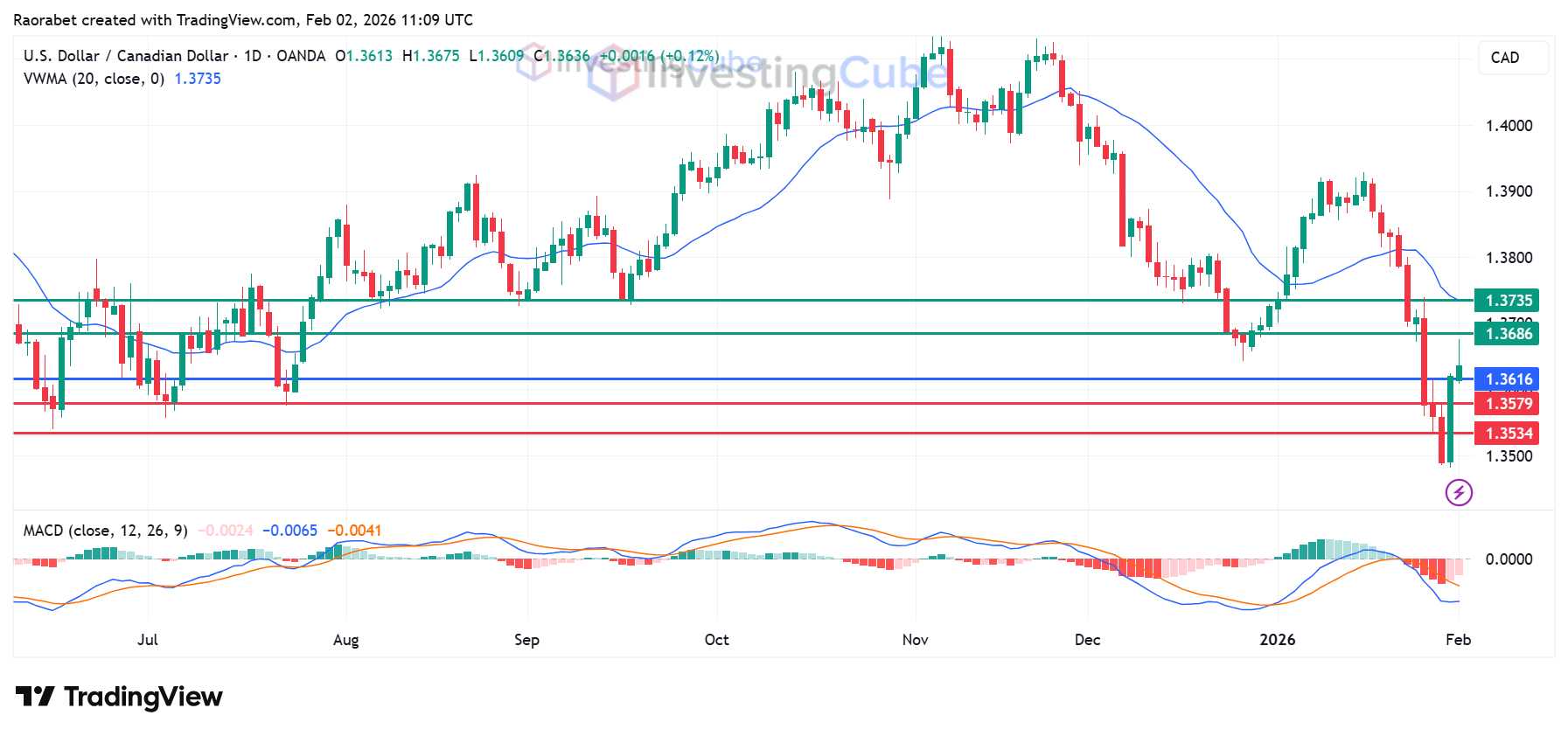
USD/CAD on the daily timeframe on February 2, 2026 with key levels of support and resistance. Created on TradingView
A combination of rising oil prices and positive views on global growth helped the Canadian dollar. At the same time, the US dollar struggled due to uncertainty over Fed independence and financial concerns.
Prices are dropping primarily due to easing geopolitical risk premiums. US-Iran talks have raised hopes for stable supplies, causing WTI to drop toward the $61-$62 range.
Fed and BoC policies, USMCA talks, tariff uncertainty, oil prices, and US data will affect volatility and direction.