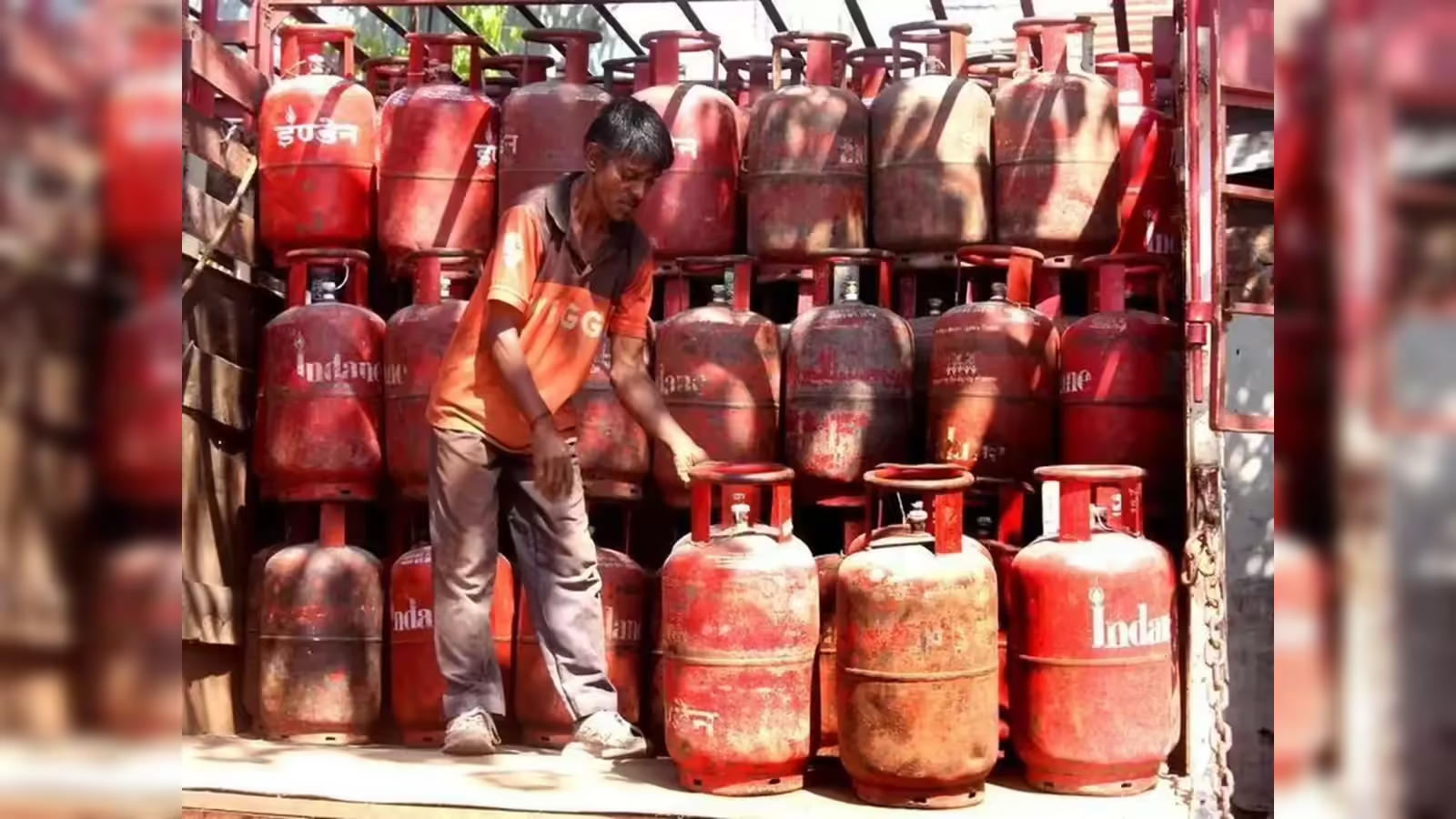
- A severe shortage of cooking fuel is forcing roadside vendors and laborers out of New Delhi. High fuel prices have made city living unaffordable, leading to a visible "migration of workers" back to rural areas.
- Indian government has imposed new export levies to safeguard local supply.
- Government redirects fuel to households, the commercial sector remains sidelined. Basic meal prices at roadside stalls have jumped 25%, and the cost of black-market LPG cylinders has reportedly quadrupled for low-income families.
The month-long conflict in the Persian Gulf is driving an acute energy crisis across India, with the closure of the Strait of Hormuz triggering a severe shortage of Liquefied Petroleum Gas (LPG). As reported by Investing.com, the disruption has moved rapidly from global shipping lanes to the local economy, forcing roadside vendors outside New Delhi’s Kashmiri Gate station to abandon their stalls.
With cooking fuel prices making urban life unaffordable, a steady stream of workers is being pushed back to rural areas. Only a handful of LPG vessels have reached Indian ports this month, covering just a few days of national demand and threatening the livelihoods of the urban poor.
India gas crisis 2026: How rising fuel costs are driving household inflation
The impact on India’s broader activity is becoming more pronounced as key industries grapple with fuel-related price hikes. In the capital, the price of a standard meal at roadside stalls has jumped 25% in a single month, while the cost of black-market LPG cylinders has reportedly quadrupled for some low-income families.
Inflationary pressure is most visible in the hospitality and catering sectors. Top palm oil buyers report a sharp decline in vegetable oil consumption as restaurants scrap fried snacks and families curtail wedding guest lists to manage soaring overheads.
Government response to LPG shortage: Raids, rationing, and the PNG push
New Delhi’s government has responded by invoking emergency powers to compel refineries to prioritize domestic LPG production. Building on the measures I reported earlier this month, including the 25-day inter-booking rule, the state is now accelerating the migration to Piped Natural Gas (PNG) at a rate of 10,000 new connections per day.
While these measures currently cover approximately 60% of national demand, the commercial sector remains largely sidelined. Over 3,000 raids have been conducted this month to combat hoarding and black-market activity.

India fuel export taxes: New Delhi moves to shield consumers from supply crunch
In a drastic move to stabilize the domestic market, India has announced a series of tax changes aimed at curbing fuel outflows. As reported by Bloomberg, Finance Minister Nirmala Sitharaman confirmed that the government has imposed a ₹21.5 per liter duty on diesel exports and ₹29.5 on jet fuel.
These levies are intended to ensure that refined products remain available for domestic consumption as the country tries to shield its citizens from the deepening Middle East conflict. This “India-first” energy policy reflects the severity of the supply gap currently facing the South Asian nation.
Conclusion: A structural shift in India’s energy security
The current LPG gas shortage in India is no longer just a temporary supply-chain hiccup; it is a fundamental stress test of the nation’s energy resilience. By implementing aggressive export taxes on diesel and jet fuel while forcing a massive technological shift toward PNG, the government is attempting to “de-risk” the Indian economy from the volatility of the Persian Gulf.
However, the visible exodus of workers from New Delhi suggests that for many, these measures may be coming too late. Until maritime routes in the Middle East stabilize, the elevated risk to India’s manufacturing and service sectors will continue to weigh heavily on regional growth projections.
The Indian government imposed a ₹21.5/liter duty on diesel and ₹29.5/liter on jet fuel to ensure that these products are prioritized for domestic use rather than being sold abroad during the current Middle East energy crisis.
As of March 29, 2026, the price of a domestic LPG cylinder varies by city due to local taxes and supply logistics.
In New Delhi, the price stands at ₹913.00, while in Patna, it has crossed the ₹1,002.50 mark following the recent ₹60 hike triggered by the Middle East energy crisis.
The standard 14.2 kg domestic cylinder is currently priced between ₹912 and ₹1,003 across major metros.
However, due to acute shortages and the closure of the Strait of Hormuz, black-market prices for these cylinders have reportedly quadrupled in some urban centers as formal supply is rationed.