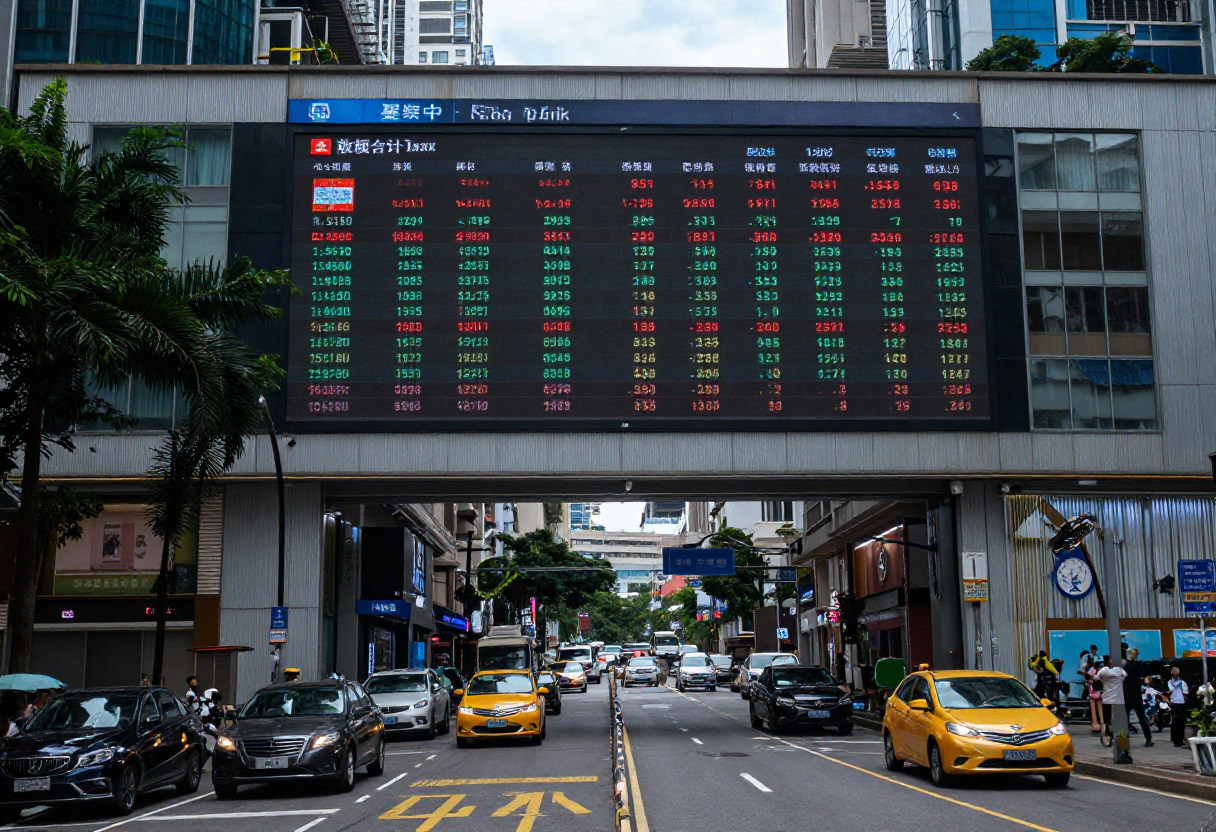
- The Hang Seng Index remains in a broader uptrend despite recent corrections, with buyers attempting to regain control above key moving averages.
- Fundamentally, the index is supported by improving sentiment, strong performance in Chinese tech stocks, and expectations of policy support from China.
South Korea’s KOSPI index surged by 5.05%, or 284.55 points. South Korean equities saw a strong rally, with the benchmark KOSPI surging more than 5% to finish at 5,925.03. Smaller companies also posted solid gains, as the KOSDAQ index climbed 2.41% to 1,164.38. The sharp move in the market triggered a brief five-minute trading pause after KOSPI 200 futures jumped by 5%.
This surge supports the Asian market’s gain, while investors are assessing Japan’s trade data and waiting for the U.S. Federal Reserve’s interest rate decision. The Hang Seng index also surged by 0.61%, or 156.88, while the CSI 300 rose 0.45% to 4,658.33.
The ongoing Middle East war continues to escalate, which keeps investors on edge. The wave of attacks on the United Arab Emirates’ energy infrastructure has raised fears of oil supply disruptions. A fire at the UAE’s Fujairah oil zone broke out after a drone attacked this gas facility. This attack damaged a tanker near the strategic strait of Hormuz.
Let’s first take a technical look at the Hang Seng trading chart before exploring the fundamental drivers behind the index.
Hang Seng Index Technical Outlook:
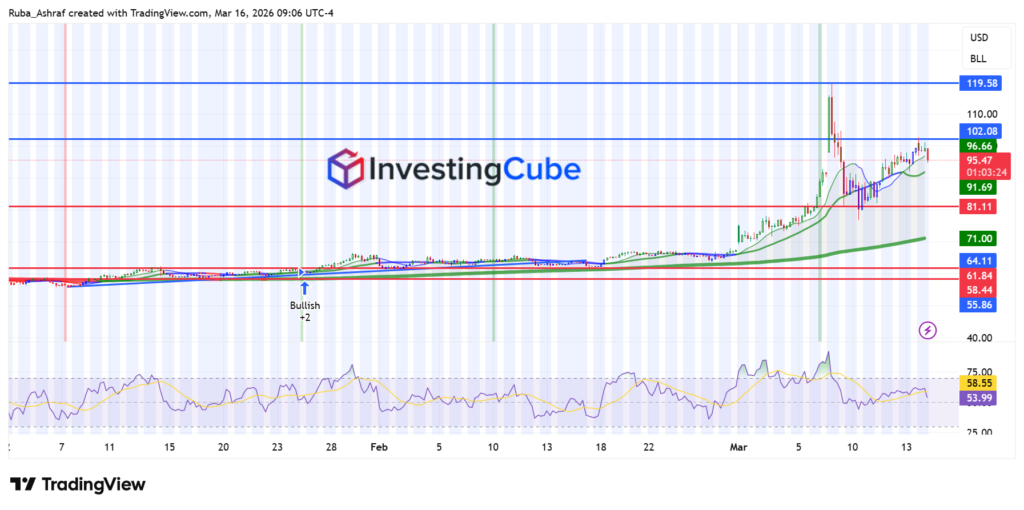
The Hang Seng Index remains in a broader uptrend despite recent volatility. After a strong rally that pushed prices toward the 28,000 resistance level, the index faced strong selling pressure and entered a corrective phase. This pullback brought the price down toward the 25,700-26,000 support zone where buyers stepped in.

From a technical perspective, the moving averages still indicate an overall bullish structure, although moving below the shorter-term trend line during the previous correction phase. Notably, buyers are now trying to regain and maintain control above the moving average trend line. This indicates that the bullish momentum is not fully broken despite the recent dip. Looking at the key levels:
- Immediate resistance stands around 26,200–26,300.
- Followed by stronger resistance near 27,300 and 28,000.
On the downside, support is seen at 25,700, with a deeper level near 25,000, which acted as a strong floor during the recent sell-off. The RSI is currently hovering around the 50 level. This is reflecting neutral momentum, which means that the market is neither overbought nor oversold, leaving room for the next directional move depending on whether buyers can sustain the recovery.
Key Fundamentals Driving the Hang Seng Index
- Gains in large-cap Chinese tech stocks like Alibaba and Baidu have supported the index, with strong momentum in AI and cloud-related businesses boosting sentiment.
- Better investor confidence and supportive financial conditions have helped valuations recover and attract inflows into Hong Kong equities.
- China’s economic outlook and policy expectations: Hopes for stronger growth, policy support, and stabilization in China’s economy continue to influence the index direction.
- Strong export data and resilient trade activity from China have provided a positive backdrop for Hong Kong-listed companies.
- External factors such as US-China relations and global risk appetite continue to impact flows into the Hang Seng.
Immediate resistance is around 26,200–26,300, while strong support lies near 25,700 and 25,000.
The index is mainly driven by Chinese tech sector gains, policy expectations, and overall market sentiment.