


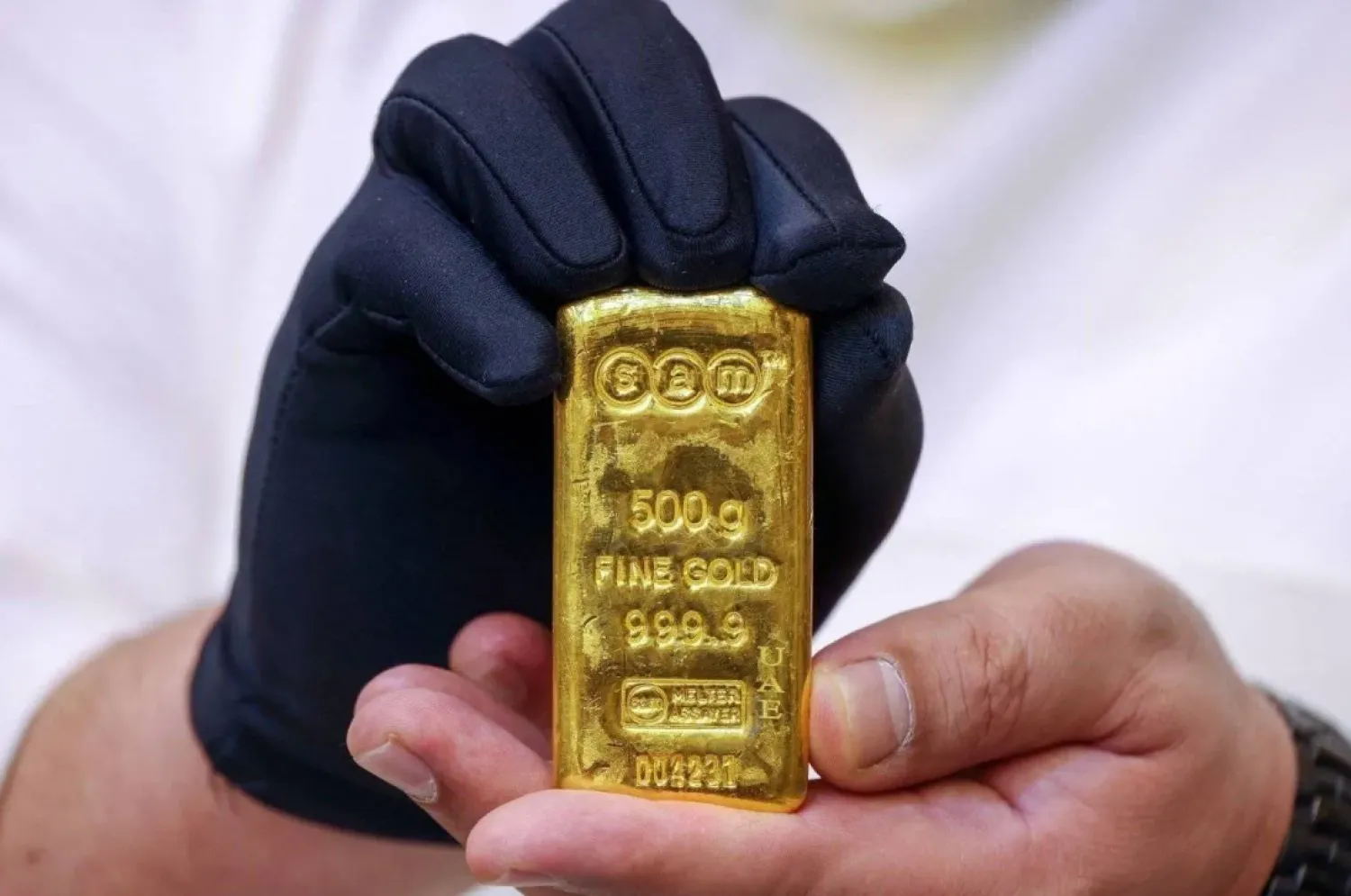
- Growing central bank appetite is pushing gold price up
- US economy trajectory and Fed interest rate policy hold a strong sway on XAUUSD performance
- Multiple top-tier investment banks predict that gold price could reach $5,000 in 2026
Gold has been on a roll, hitting $4,342 an ounce as of this writing. That’s almost a 4% jump from the $4,140 it was going for in mid-November, according to Kitco. What’s interesting is that this caps off a year where gold’s value has grown by about 28%. We discuss this uptick, and weigh the odds of XAUUSD reaching $5,000 per ounce in 2026.
What Fueled Gold Price Upsurge?
A big part of the gold price rally has to do with what’s happening around the world. With all the tension in places like the Middle East and Ukraine, people are looking for somewhere safe to put their money. This has caused inflows into gold ETFs to hit $2.1 billion in November, according to the World Gold Council.
This demand is strategic, not opportunistic. We are seeing nations, especially emerging market economies, actively diversifying their foreign exchange reserves away from the US Dollar. Concerns over asset seizures, as witnessed with Russian reserves, and a broader desire for de-dollarization amidst ongoing trade and political tensions are fueling this shift.
Will Gold Price Reach $5,000 in 2026?
Many analysts are currently talking about the possibility of gold price reaching $5,000, a 16% leap from its current levels. Optimism abounds. A Goldman Sachs investor poll from late November found 36% anticipating that milestone by end-2026, citing central bank voracity and fiscal anxieties. Bank of America echoes this, pegging an average $4,538 for 2026 with upside to $5,000 if yields dip further, as detailed in their December outlook. Deutsche Bank ventures bolder, forecasting proximity to $5,000 in 2026 and surpassing it in 2027
The Bullish Case
Heightened U.S.-China frictions or Middle East flare-ups could swell central bank buys to 1,200 tonnes annually, per World Gold Council extrapolations, driving prices to $4,800 by mid-2026. Furthermore, gold is typically inversely correlated with the US Dollar (USD).
Because gold is denominated in dollars globally, a weaker dollar makes it cheaper for buyers using other currencies, which increases demand. Even though the dollar has been strong at times, many expect it to weaken. Lower real interest rates, because of the Federal Reserve potentially easing monetary policy, are also helping gold’s price. This all adds up to a good situation for gold investors.

The Bearish Scenario
Conversely, a robust U.S. economy might prompt Fed hikes by late 2026, strengthening the dollar by 5% and eroding gold’s appeal. Eased geopolitics, say a Ukraine truce, could slash safe-haven premiums, triggering $1 billion ETF outflows, akin to 2022’s reversal.
If the global economy, especially the U.S., grows strongly, real interest rates could increase. This could cause investors to move their money out of gold and into riskier assets like stocks. Also, if the U.S. dollar becomes surprisingly strong, maybe because other major economies struggle or the Fed isn’t as aggressive in easing monetary policy, it would reduce the buying power of those using other currencies and reduce demand for gold.
Gold Price Near-Term Prediction
XAUUSD Relative Strength Index (RSI) is at 72, which means there is strong momentum that has driven it to overbought territory. There’s likely to be immediate resistance around the all-time high of $4,380 and $4,400. If gold breaks through these levels, it could rise to $4,800. However, if it falls below the middle Bollinger Band at $4,200, it might drop back down to $4,228. The upside narrative will be invalid if XAUUSD goes below that level and the pair could fall lower under increased selling pressure to find the next support at $4,184 per ounce.
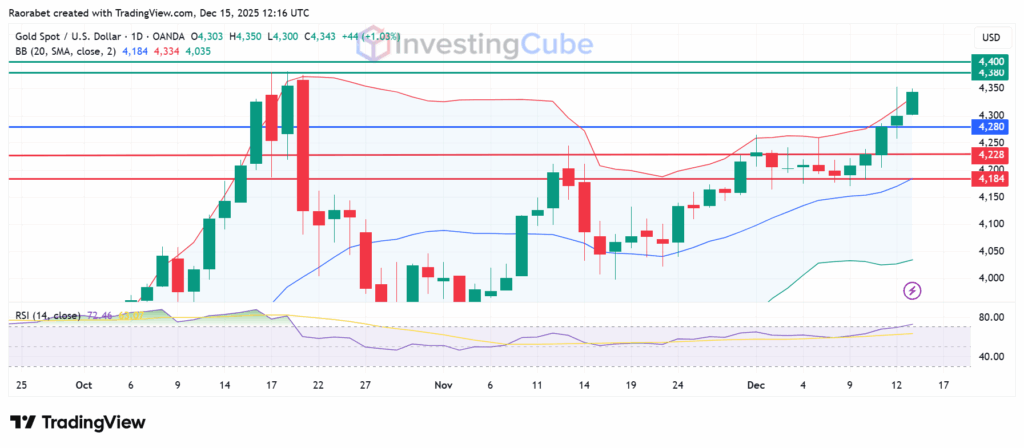
Gold price daily chart on December 15, 2025 with key resistance and support levels. Created on TradingView
A stronger global economy could lead to higher interest rates. Investors might then move money from gold to investments with higher growth potential.
Central banks around the world, especially in emerging markets, are buying a lot of gold. This is likely due to worries about geopolitical instability and a desire to move away from relying solely on the U.S. dollar.
Yes. The current market momentum and prevailing fundamentals signal that the metal could rise to a new all-time high around $4,500 before the year ends.