



- Unilever share price is trading near two-year lows, with pressure points emanating from geopolitics, inflation and weak earnings
- Rising operational costs are exacerbated by a spike in global oil prices and disruptions in supply chain, including essential plastic products
- The stock is technically oversold, creating an opportunity to buy-the-dip for long-term traders but caution is essential
Unilever shares have fallen over 15% year-to-date on the London Stock Exchange, reaching their lowest point since January 2024 and trading near £41.20 at the time of writing. This downturn has raised questions about whether the stock’s traditionally defensive character is fading. How did it get here and what’s the outlook for the second quarter of the year?
What Is Happening to the Stock?
The first and most structural force is the Iran war, which began in late February and has sent oil prices above $100 a barrel. Soaring energy expenses followed, reshaping markets almost overnight. Jet fuel costs shot up by about 103% in just thirty days. The supply chain of materials like plastics and industrial chemicals has since dragged, caught in the ripple.
For Unilever, this matters in multiple directions. Manufacturing everyday items gets heavier when energy prices climb. The logistics chain becomes more expensive, especially with a presense in nearly every corner of the world. Rising inflation quietly eats into what people can spend, particularly in emerging economies that provide more than half its income. The consumer staples sector, which investors typically treat as a port in a storm, suddenly looks exposed.
On March 31, Reuters reported a company memo from Unilever’s personal care president, Fabian Garcia, announcing an immediate global hiring freeze for at least three months. The memo cited macroeconomic and geopolitical realities, especially the Middle East conflict, as substantial challenges ahead. While hiring freezes are a conservative measure, in this scenario they highlight caution amid the stock’s recent decline.
Also, pressure stems from recent quarterly results that missed expectations. Growth in emerging markets, notably in Asia and Latin America, slowed due to rising price sensitivity among consumers dealing with inflation. Increased costs for raw materials like palm oil and packaging have tightened profit margins, despite efforts to raise prices.
The Fundamental Picture and Q2 2026 Outlook
Looking ahead to the second quarter of 2026, market analysis from Morningstar anticipates that Unilever will stabilize sales growth between 3% and 5%. The company is focusing on a rebound in the European market, where easing energy expenses may give consumers some relief in spending capacity.

If geopolitical tensions between calm down and the prices of raw materials go down, Unilever share price could stabilize and start to make up for some of its losses. But if inflation rises again or consumer spending slows down, the downtrend could last longer. The stock’s future will probably depend on how well pricing strategies work and what happens in the next few trading sessions.
Unilever Share Price Forecast
The stock is currently testing a multi-year support zone at 4,100p. If this level fails to hold, it will likely find the next support at 4,070p. A stronger downward momentum could push things lower to the psychological floor at 4,000p. On the upside, any bounce will likely encounter sales pressure near 4,450p, with a move beyond that opening the possibility to test 4,667p.
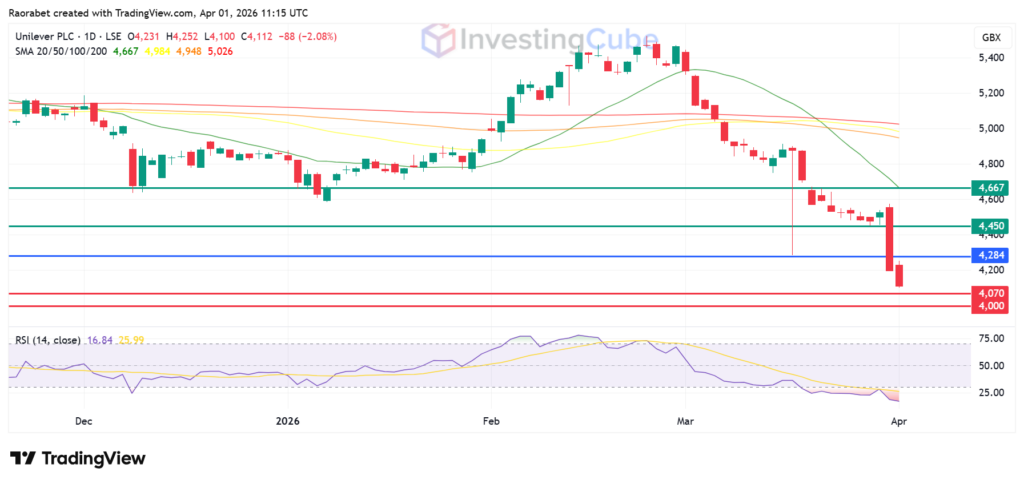
Unilever share price performance on the daily time frame with the key support and resistance levels on April 1, 2026. Created on TradingView
Unilever expects a modest recovery in volume as price inflation cools. The focus will be on the divestment of its ice cream division, which aims to simplify the business and improve overall operating margins.
For long-term dividend investors, yes. With the RSI showing the stock is oversold, a technical rebound is likely. However, conservative traders should wait for the stock to reclaim its 50-day moving average before entering.
If demand weakness spreads or commodity prices stay high, the decline could get worse. This challenges the buy-the-dip optimism, since having exposure to emerging markets adds more risk than most people think.