


- Royal Mail share price is down by 20% in 2026 as the company struggles with a sharp decline in letter volumes and structural readjustments post-acquisition
- Inflationary pressures and rising cost of labour have also narrowed the company's margins
- The recent jump in the share price is likely short-lived as excitement over 8p dividend cools down
Royal Mail stock has faced a challenging start to 2026. After losing nearly 20% of its value early in the year, the stock experienced a brief 6% upswing, only to retreat by about half of those gains in a recent 3% decline. This rapid recovery appeared to result more from short covering and bargain hunting at oversold technical levels than from any fundamental changes in the company’s prospects.
What Is Happening to the Stock?
The fluctuations are less about mail volumes and more tied to the complexities involved in integrating a significant corporate acquisition. The drop following the short-lived rally indicates that investors took profits once the initial momentum subsided. This suggests that the market’s view of this as a temporary valuation adjustment may be optimistic.
The company’s main operations continue to face structural challenges, including a steady decline in letter volumes as digital communication replaces traditional mail, and intense competition in parcel delivery from private firms.
Additionally, inflationary pressures and rising wage costs have tightened profit margins, while recent strikes have affected service reliability. Since the UK government approved the acquisition of EP Group late last year, the stock has also become closely linked to the successful completion of that deal and the associated debt restructuring.
Odds of a Recovery
Near-term recovery prospects appear limited. Although ongoing cost reductions and growth in parcel services could offer some support, issues such as persistent labor disputes and regulatory oversight on service standards remain obstacles. Analysts generally adopt a cautious stance, emphasizing that sustained improvement would likely require clear signs of stabilizing volumes and margin gains.
A sharp rise in Royal Mail share price does not necessarily mean steady improvement lies ahead. Because its performance ties closely to how people spend money across Britain, gains could fade fast if households pull back. What looks like momentum might just be noise. Recovery timelines some experts offer seem too optimistic given these links.

The recent 6% jump was probably driven by market anticipation of the 8p special dividend linked to the acquisition deal. Following this dividend-driven boost, the subsequent 3% fall reflects a return to concerns about a high-interest-rate environment and slower UK economic growth.
Royal Mail Share Price Forecast
With the Relative Strength Index around 35, there may be potential for a short-term technical rebound. Immediate support holds at 355p, a price point that historically attracts buying interest. A break below this could lead to testing the 340p level. On the upside, resistance is expected near 370p, with a further hurdle around 380p.
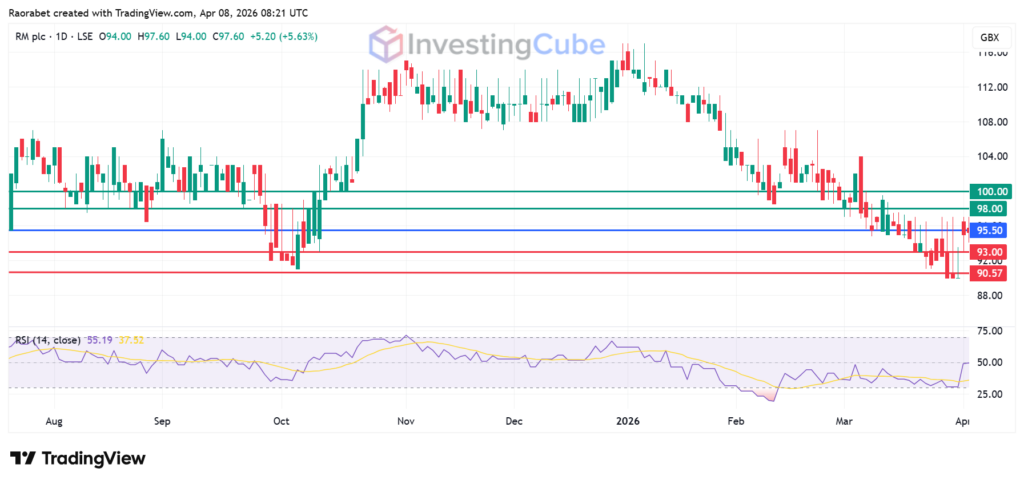
Royal Mail stock price performance on the daily chart showing the key levels of support and resistance on April 8, 2026. Created on TradingView
This decline has stemmed mainly from worries about the £2.35 billion debt incurred during the EP Group acquisition, combined with higher borrowing costs and the ongoing structural drop in letter mail volumes.
The spike was largely driven by investor anticipation of the 8p special dividend and the 2p final dividend, which provided a short-term incentive for shareholders to hold or buy the stock.
The outlook is cautious with limited upside unless cost discipline and parcel growth accelerate, as economic slowdown risks could extend the downtrend further.