


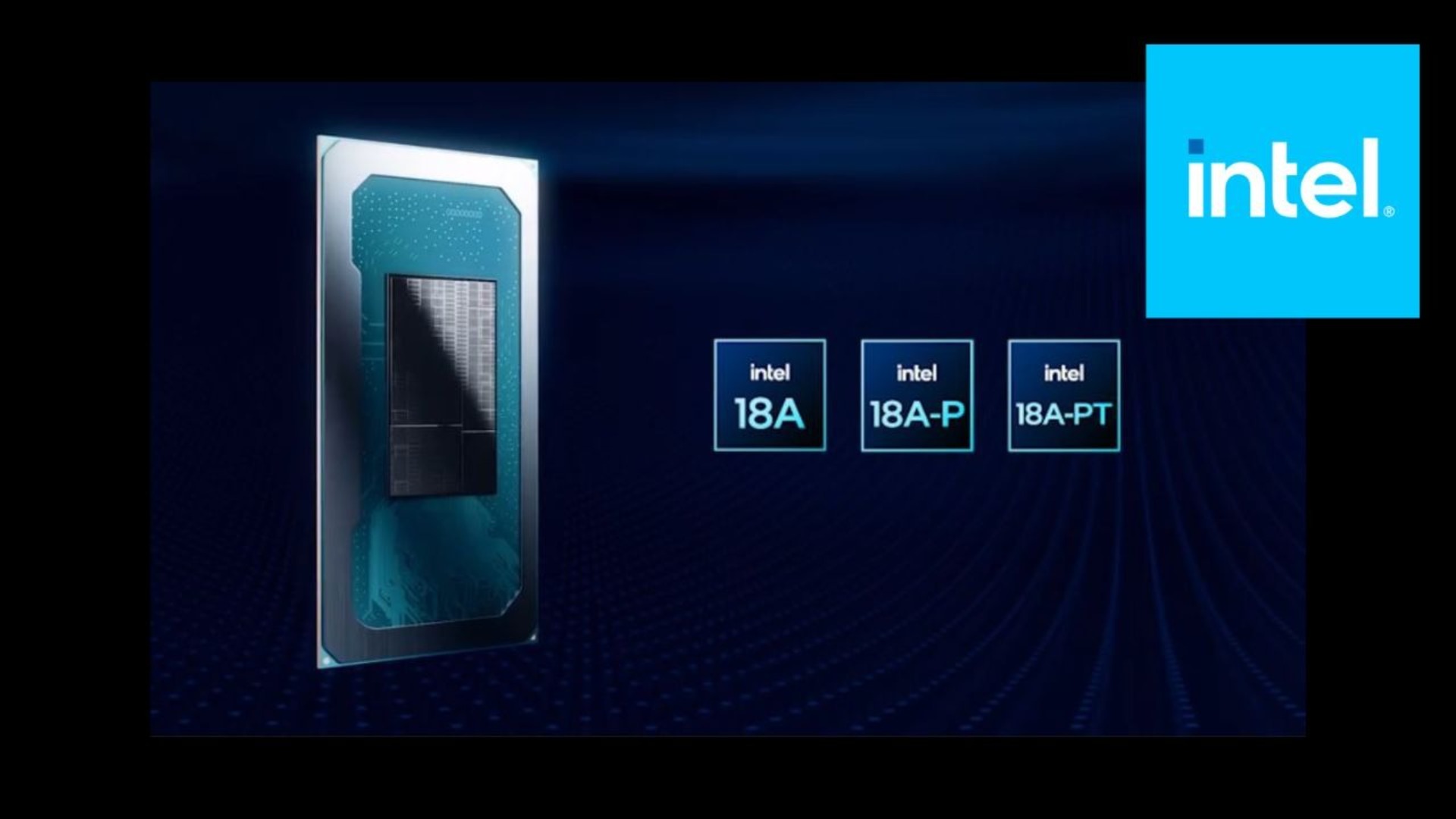
- Intel has secured a deal to be part of Terafab, a $25 billion project by SpaceX and Tesla
- The company's Foundry 2.0 strategy is a key beneficiary of the AI infrastructure competition with Core Ultra Series 3 Panther Lake processors enhancing the company's competitiveness against the likes of TSMC and AMD
- Intel has the advantage of having its foundry manufacturing facilities in the US, which cushions it from harsh trade policies
On Wednesday, April 8, 2026, Intel (NASDAQ: INTC) investors witnessed a sight they’ve been craving for years: a massive 11% gap-up. This surge wasn’t just a flash in the pan; it put the exclamation point on a reversal that began on March 31, bringing the stock’s monthly gains to a staggering 28%.
While many attribute Intel’s recent momentum mainly to the broader enthusiasm around AI, a closer look reveals that the company’s deliberate efforts to regain control over key manufacturing capabilities offer a more concrete reason for investor confidence than commonly acknowledged.
The Triple Threat Driving the Rally
While the broader tech market has been choppy, Intel found its stride through a rare trifecta of product success, strategic partnerships, and manufacturing milestones.
The pivotal moment came with the launch of the Core Ultra Series 3 Panther Lake processors, which are the first chips produced using Intel’s new 18A manufacturing process. This development addresses long-standing doubts about Intel’s ability to keep pace with competitors like TSMC in chip miniaturization, signaling a renewed competitiveness in the market.
Adding fuel to the fire was the announcement of a massive collaboration with Elon Musk’s Terafab project. This joint venture with Tesla and SpaceX positions Intel as a critical provider for AI and robotics infrastructure. This collaboration not only provides a high-volume customer for Intel’s Foundry 2.0 strategy but also marks a shift from Intel’s traditional role as a CPU vendor to becoming a crucial player in AI infrastructure.
Intel’s capacity to integrate logic, memory, and advanced packaging within US domestic facilities aligns well with the strategic needs of this $25 billion project, helping to mitigate global supply chain bottlenecks.

Will Intel Stay Up?
Looking ahead, Intel stock’s recent performance suggests sustainability if Intel maintains progress on its manufacturing schedule and AI-focused projects. The foundry initiative reflects a more proactive approach to maintaining competitiveness over the long term.
Importantly, recent price action indicates that investors are responding positively to visible progress. That said, Intel faces ongoing challenges, including substantial capital requirements and fierce competition in the AI chip sector. However, the technical prowess of 18 A manufacturing process could just be the answer to skeptics.
Technical Analysis
Following the 11% gap-up, Intel is trading at approximately $58.95, hovering just below its multi-year high of $59.17. Immediate support is found at $54.57, aligning with the upper Bollinger Band, with deeper support at $52.70. The RSI has spiked to 72 getting inside overbought territory. However, the strong volume balance suggests the trend has conviction. Bulls are now likely to encounter the first barrier at $59.20 and the psychological round figure $60.00 as the next major resistance level.
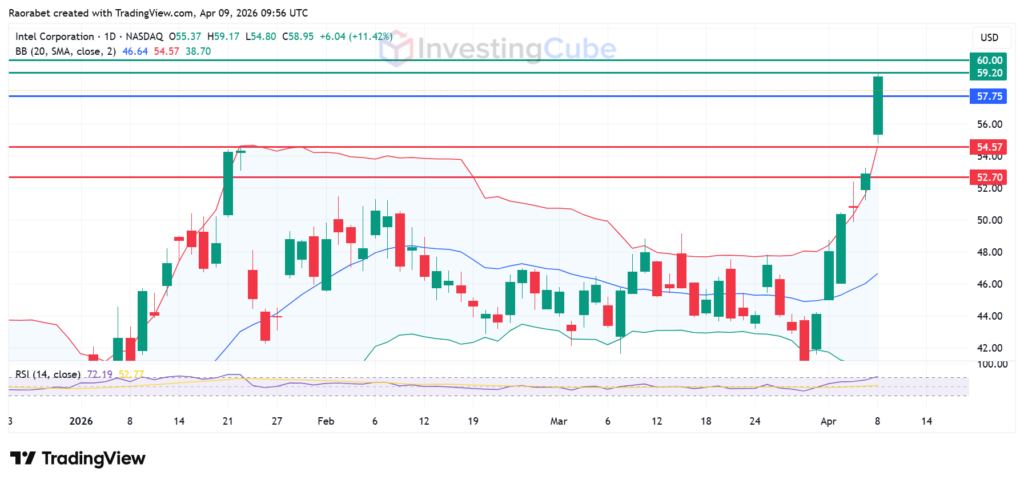
Intel Stock daily chart showing the key levels of support and resistance on April 9, 2026. Created on TradingView
The jump was fueled by the launch of Panther Lake processors built on the 18A process and a major partnership with Elon Musk’s Terafab project to provide AI and robotics chip expertise.
Yes. The shipment of Panther Lake processors marks the commercial debut of the 18A process. This is a critical milestone in Intel’s strategy to reclaim manufacturing leadership.
The main risks include potential earnings volatility and overbought technical conditions. While the turnaround is visible, Intel still faces stiff competition from AMD and Nvidia in the core AI accelerator market.