


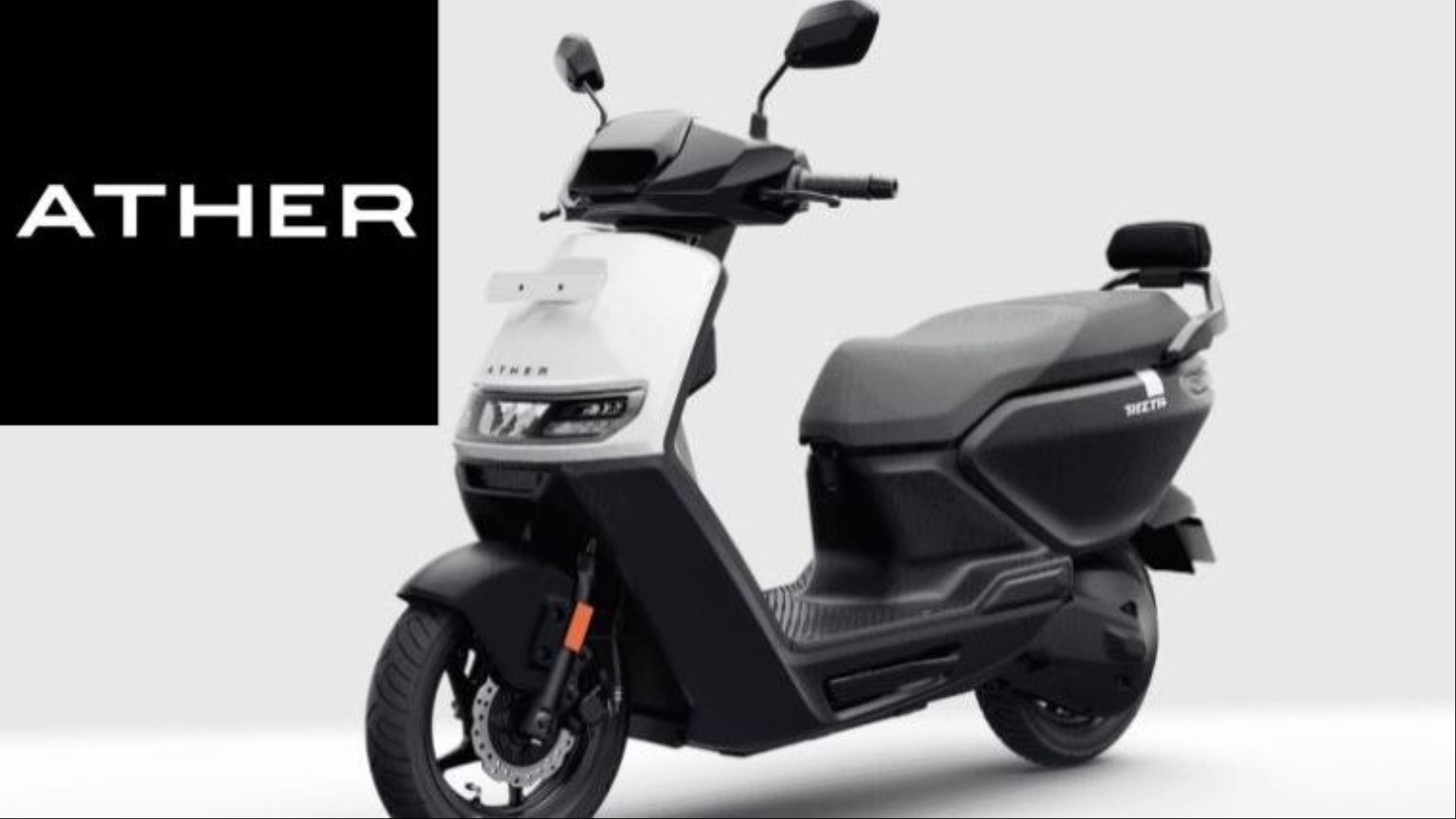
- Ather Energy share price has shot up to all-time highs, going contrary to benchmark Sensex and Nifty Indices which are on a prolonged decline
- The company is currently India's third-largest EV company by sales after overtaking Ola. The top two are Bajaj and TVS
- Ather Energy has expanded its service centres significantly, giving it a competitive edge, and a probable extension of PM E-DRIVE subsidy favours the stock too.
Ather Energy share price has jumped to all-time highs even as the broader Indian equities market struggles with global headwinds and domestic volatility. While the Sensex and Nifty 50 indices have struggled, this stock has demonstrated notable resilience with a sharp upward move.
On March 27, 2026, even as the Nifty 50 dropped more than 400 points, a decline of 1.73%, led by widespread selling in PSU banks and traditional auto sectors, Ather Energy Ltd surged to a record ₹802.90. This contrast prompts an examination of the factors driving this performance and whether the momentum can be maintained.
Why Ather Energy Is Defying the Market Trend
The rally is mostly due to strong quarterly results, successful launches of new models, and the growing popularity of electric vehicles in India. In its most recent updates, Ather said that its delivery numbers and revenue were both strong. In addition, there was a strong demand for premium scooters like the Rizta and S1 series.
The company’s revenue soared by 53% year-on-year to ₹995.7 crore in Q3FY26, and more importantly, the company dramatically narrowed its EBITDA losses to just -3%. Investors are finally seeing a clear, albeit narrow, path toward profitability.
Furthermore, Ather Energy just shared news about growing its network close to twice as big, hitting almost 500 approved service spots this financial year. When it comes to EVs, having solid support on the ground means real advantage over others.
Customers worry less when help is nearby, and that deepens their loyalty, which steadily pushes more people to take up software plans. This is a recurring revenue stream that now accounts for 14% of quarterly revenue, including software subscriptions, charging, accessories, and spares.

Is the Rally Sustainable?
Concerns around the upcoming expiry of the PM E-DRIVE subsidy on March 31, 2026, have raised fears of reduced EV demand. However, this outlook may be too pessimistic since an extension appears probable. Analysts from BNP Paribas India anticipate increased pre-purchase activity ahead of the deadline, while Nomura highlights that a Parliamentary committee is advocating for extending the subsidy until March 2028.
Underlying Risks
The rally is not without its thorns. The most immediate risk is the looming March 31 subsidy deadline, which could trigger a sharp correction in April as pre-buying demand evaporates. Additionally, competitive pressures from established players like Bajaj and TVS, known for aggressive pricing, present ongoing challenges to Ather’s profit margins despite its recent gains in market share.
Ather Energy Share Price Forecast
Ather Energy share price RSI around 68 signals strength nearing overbought risks. Resistance is non-existent in the classic sense given the all-time high, but the psychological barriers of ₹810 and ₹820 are likely to be the next major targets. Immediate support has formed at the prior breakout level of ₹750. If the market cools, this is the first floor to watch, below which an extended decline could push the stock to test ₹723.
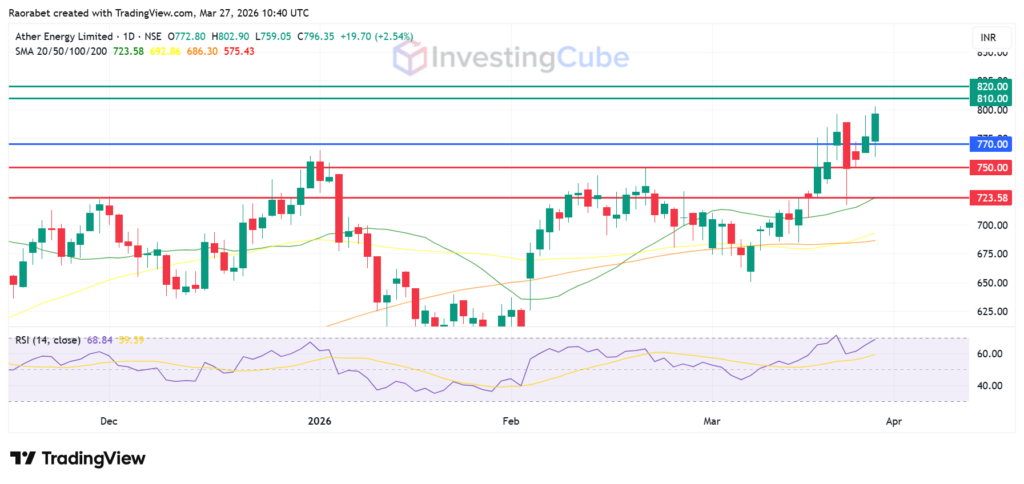
Ather Energy share price daily chart on March 27, 2026, showing key levels of support and resistance. Created on TradingView
Ather recently climbed to third place in India’s EV rankings. It currently trails TVS Motor Company and Bajaj Auto, having recently overtaken Ola Electric in retail sales volume for the 2025 calendar year.
Not yet, but it’s getting close. Ather lost ₹84.6 crore in the third quarter of FY26. But its EBITDA margin went up by 1,600 basis points from the previous year, which is a big step toward breaking even.
Ather is doing well because of strong Q3 FY26 results, a quick expansion of its service network, Ola Electric’s market share drop, and rising hopes for a PM E-DRIVE subsidy extension.