


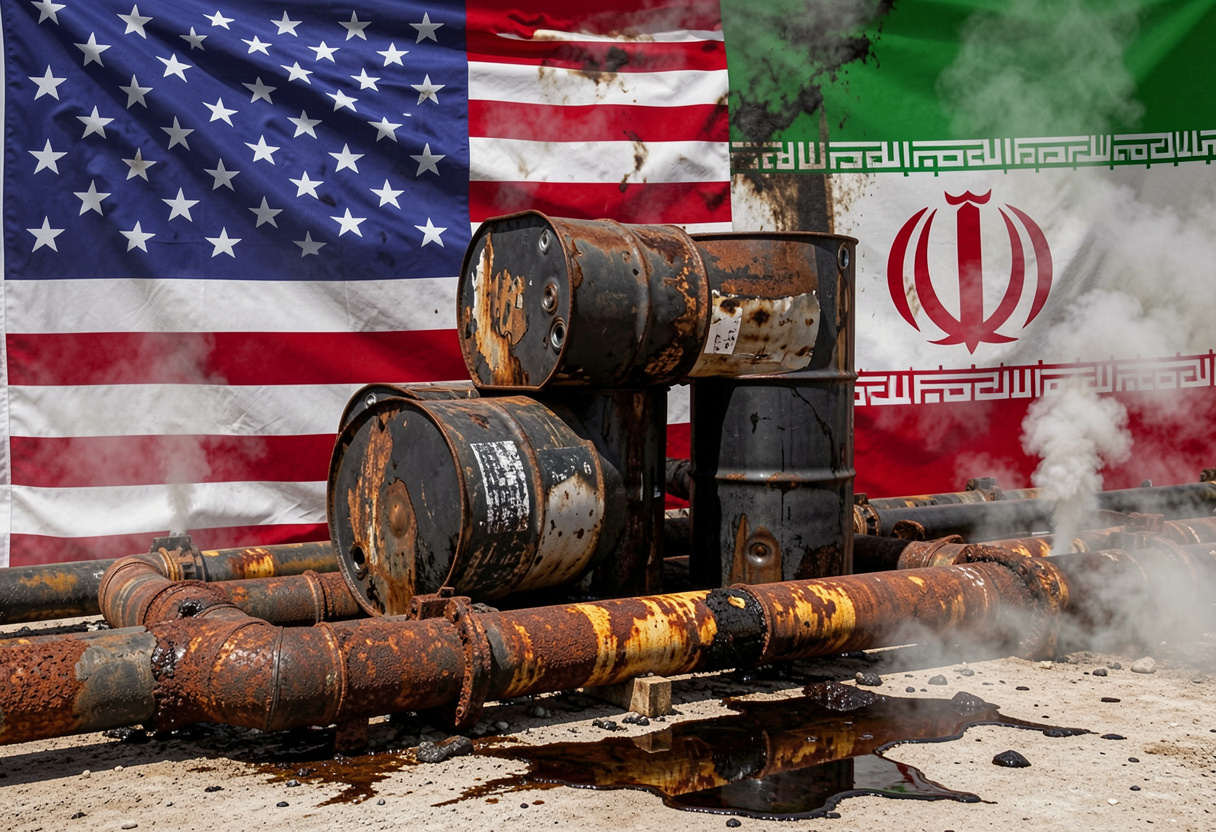
- Failure of US-Iran ceasefire talks has driven oil prices back above $100, with the battle frontier moving to the Strait of Hormuz
- The Strait of Hormuz is critically important to global shipping and trade, including serving as a passage for 20% of crude oil, 25% on natural gas and fertilizer
- Prolonged closure of the Strait due to US-Iran confrontation means higher-for-longer oil prices, disruption of global trade and contraction of global GDP growth
Weekend talks between the US and Iran fell apart in Islamabad, sparking fresh unease across the Middle East. After 21 hours without progress, Washington shifted course, US President Donald Trump declared naval forces would soon seal off Iranian ports. The move targets flow through the Strait of Hormuz, a narrow waterway critical for oil shipments worldwide.
Impact on Oil Prices
The market’s immediate reaction to the breakdown in talks was sharp and swift. Brent crude prices surged past $103 a barrel almost instantaneously. This rapid increase occurred because the Strait of Hormuz is a crucial transit point, handling approximately 20% of the world’s seaborne oil and nearly 25% of its liquefied natural gas (LNG).
While many initially viewed this as a temporary price spike, a closer examination of the underlying data suggests a more sustained impact. The International Energy Agency has already characterized this event as the most significant supply disruption in history. Should the blockade persist, we could face a structural deficit of 6 million barrels per day, potentially driving prices to extreme levels and significantly curtailing demand to rebalance the market.
Goldman Sachs and other market analysts caution that a prolonged closure could push prices towards $150 or higher, particularly if alternative transportation routes cannot adequately compensate. This assessment challenges the widely held belief that any disruption would be brief and quickly resolved through diplomatic efforts or naval escorts. In reality, the time required to secure the waterway, coupled with the potential for retaliatory actions, could maintain elevated prices much longer than current market expectations.

Impact on Global Trade
The Strait of Hormuz serves as a critical conduit for energy shipments destined for Asia, Europe, and beyond. Any substantial disruption would necessitate rerouting vessels through longer, more costly paths, inevitably increasing shipping expenses and insurance premiums.
A recent assessment by UNCTAD on Strait disruptions indicates that even partial restrictions could introduce considerable delays and escalate costs across global supply chains. Commodities like fertilizers, which also pass through the area, would encounter similar pressures, potentially affecting food security in regions heavily reliant on imports. This outcome extends beyond typical expectations of temporary trade friction; the cascading effects could alter shipping patterns and elevate costs across various sectors for an extended period.
What the Numbers Reveal About Global Exposure
The economic implications are quite concrete. The Federal Reserve Bank of Dallas has meticulously modeled the potential shock. A closure of the Strait, removing nearly 20% of global oil supplies from the market, is projected to elevate the average WTI price to $98 per barrel and reduce global real GDP growth by an annualized 2.9 percentage points in the second quarter of 2026. These projections were initially developed before Sunday’s blockade announcement, which has since seen oil prices climb above $104.
Wood Mackenzie has indicated that a 2026 Brent crude average of $90 per barrel would likely restrict global GDP growth to below 2%, a decrease from a pre-war estimate of 2.5%. Such a scenario could lead both the EU and the United States into a recession. Should prices reach $100 a barrel, global GDP growth would potentially decline to 1.7%.
The Critical Time Factor
It may be some time before we see a decline in oil prices. Even after the cessation of hostilities, prices are unlikely to fall until the strait is fully reopened and any damaged oil infrastructure is repaired. JPMorgan’s commodities analysts have pointed out that the last tanker to clear Hormuz on February 28 is expected to reach its destination around April. This will be the point at which the global supply chain runs out of pre-closure barrels. After that, it is impossible to hide the real seriousness of the supply gap with strategic reserves.