



- Improved risk sentiment has provided the primary propulsion for the S&P index, amid hope of ceasefire in US-Israel vs Iran war and upbeat US jobs data
- Concentration risk remains as few tech companies still act as market bellwether and AI underperformance could impact sentiment negatively
- The outlook for Q2 is cautiously optimistic
The S&P 500 has found its footing, at least for now, after one of the worst starts to a year in recent memory. The broad market index rose 0.44% on Monday to close at 6,611.83. This was the fourth day in a row that it had gone up. Investors were carefully processing diplomatic signals from the Middle East. The index is now 5.67% lower than its all-time high from January 27, 2026, but the mood has changed a lot since the panic-driven selling at the end of March.
What is Fueling the Rebound?
Three forces are working in the market’s favour simultaneously. The first is geopolitics. Axios reported that talks between the US, Iran, and several regional mediators may bring a 45-day pause in fighting that could lead to a permanent end to the war. In addition, Reuters reporting that Iran and the US have received a plan that, if agreed, would result in an immediate ceasefire and the reopening of the Strait of Hormuz. Right now, traders lean on whispers more than data, betting tension could fade faster than forecast.
Secondly, changes in expectations around interest rates are contributing to the positivity. The labor market also offers encouraging signs. The March jobs report revealed payroll growth of 178,000, considerably above the Dow Jones consensus estimate of 59,000. This stronger-than-expected data from has helped relieve some concerns about stagflation linked to recent oil price shocks.
Third, earnings season is approaching, with major companies like JPMorgan, Goldman Sachs, Johnson & Johnson, and BlackRock scheduled to report. If their results meet or exceed expectations, this could reinforce investor confidence in the rally.
Is the Momentum Sustainable?
Currently, many investors interpret the rally as a relief rebound, anticipating that the momentum will strengthen once a ceasefire is confirmed and earnings reports validate expectations. While appealing, this view may be optimistic given that not all supporting data fully align. Some analysts suggest what we’re seeing could be a temporary relief rally rather than a shift to a sustainable upward trend.

The AI trade, a theme that powered 2024 and 2025’s gains is no longer driving the market as much. While the artificial intelligence investment boom has been a significant tailwind over the past two years, much of that optimism is already reflected in prices. To take the next leg up, investors will likely seek clearer evidence that AI investments are translating into tangible revenue growth and improved profit margins.
S&P 500 Index Forecast
The S&P 500 is near 6,612 on the daily chart. The ADX indicator reading of 38.96 indicates that the upward trend is strong. Resistance levels include the primary one is at the 200-day SMA at 6,648 followed by 6,700. Support sits at 6,528 and the second one is at 6,475.
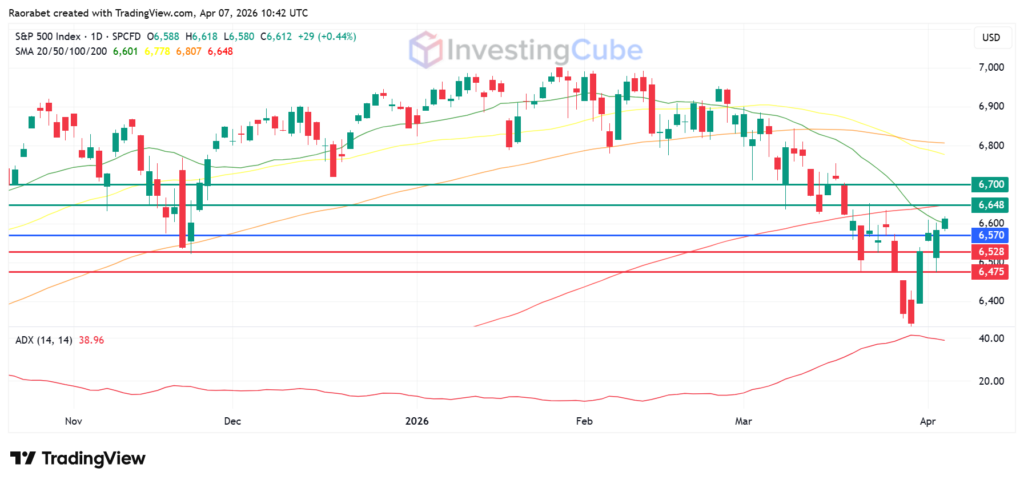
S&P 500 index performance on the daily chart with key support and resistance levels on April 7,2026. Created on TradingView
The combination of tentative de-escalation in the Middle East and renewed hope around corporate earnings have underpinned the four-day rise.
Renewed escalation in the Middle East, sticky inflation, or slower AI spending could weigh on the index.
While the near-term trend is encouraging, its sustainability will depend on the breadth of market participation. If gains remain concentrated in a limited number of technology stocks, the index could face greater volatility should those leading shares lose momentum.