- JPY/VND has recently rebounded after a prolonged decline from September 2025
- The primary fuel for the yen's rise is the widely reported rate check on USD/JPY by the New York Federal Reserve
- Vietnam targets a GDP growth of 10% in 2026 and that will have an impact on the dong's strength
The Japanese yen, after a four-month slide against the Vietnamese dong, has reversed course. After being Asia’s weakest currency since late September 2025, the yen has gained ground in the last few days.
Google Finance data shows the JPY/VND exchange rate increased over 3% since January 23, from around 166 to above 171. This shift interrupts a broader weakening trend for the yen, which was caused by policy and market factors that favored the dong’s stability because it is tied to the U.S. dollar.
Why the Sudden U-Turn by JPY/VND?
The yen’s jump is linked to worries about intervention. Japanese officials had been giving warnings to stabilize the currency for weeks. But, the market reacted when reports came out that the Federal Reserve Bank of New York was doing rate checks for Japan.
Reuters reported the yen rose almost 4% since January 24, without direct action, thanks to warnings from Japanese Prime Minister Sanae Takaichi and talk of Japan and the U.S. working together to support the currency.
In forex, a rate check is often the last warning before central banks enter the market to buy their own currency. Since the State Bank of Vietnam manages the VND closely to the USD, the yen’s broader rise against the dollar is mirrored in the JPY/VND pair, increasing the rise.
Is the Momentum Sustainable?
While the current JPY/VND gain seems strong, its sustainability is uncertain. If intervention threats continue without real action, the momentum may fade, like in the past when verbal warnings only gave temporary relief.
ING Think’s outlook from early January suggests the yen will gradually get stronger, potentially reaching JPY/VND levels around 168-170 if Federal Reserve cuts continue, which supports some sustainability. For the yen to keep rising in 2026, the interest rate difference needs to get smaller.

For the yen to keep rising in 2026, the interest rate gap needs to narrow. Currently, Japan’s real interest rates are still low compared to Vietnam’s growth. Vietnam is aiming for 10% GDP growth this year. If Vietnam’s economy stays strong, the State Bank of Vietnam may need to keep the dong strong to fight imported inflation, which could limit the yen’s gains.
Monetary policy differences will likely guide JPY/VND. Citigroup’s January 20 forecast expects the Bank of Japan to possibly raise rates three times in 2026 if yen weakness continues, narrowing yield gaps with Vietnam’s stable dong policy. Also, global trade tensions, including US tariffs, could indirectly affect the pair by affecting Vietnam’s export economy.
JPY/VND Prediction Today
JPY/VND pivots at the psychological 170.00 and the RSI at 65.23 calls for the upside. Immediate resistance stands at YTD highs of 172.40. If the bulls get past this, the next target is 172.00. On the downside, support is at 169, followed by the recent low at 168.20. The RSI momentum indicator shows potential overbought conditions in the short term. This suggests a short pause or pullback before another rise.
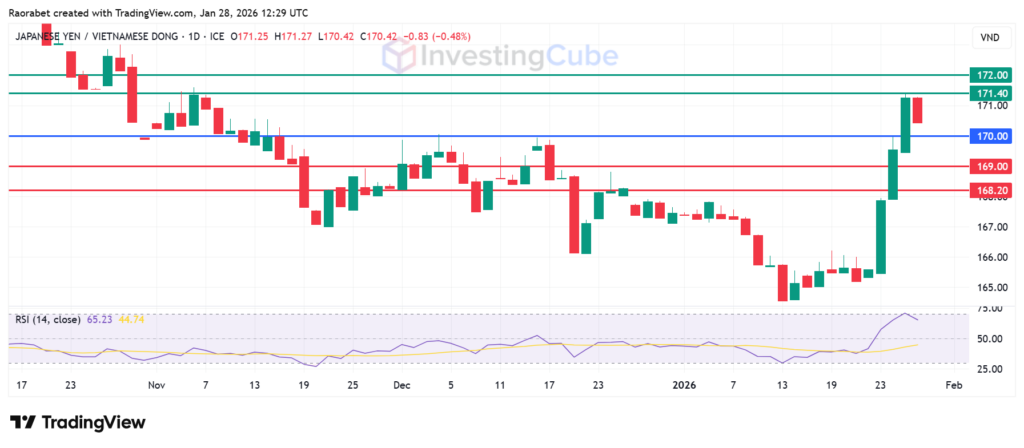
JPY/VND on the daily chart with support and resistance levels on January 28, 2026. Created on TradingView
The rise was triggered by speculation of a coordinated currency intervention by the Bank of Japan and the U.S. Federal Reserve. A rate check by the New York Fed forced traders to quickly close their bets against the yen.
The yen was pressured by monetary policy divergences, yen weakness from fiscal uncertainties, and carry trades favoring higher yields elsewhere.
The upcoming Japanese snap election on February 8 is a major risk. If the new government pushes for aggressive fiscal spending without BoJ support, the yen could lose its recent gains and return to its long-term downtrend.