


- GBP/USD has recently shown sparks of volatility, amidst mixed signals from Middle East war and surprise hawkish central bank moves
- The UK's CPI, PMI and retail sales data will be out in the next week, and will likely bring fresh impetus
- Recent geopolitical developments have raised the prospect of policy divergence by the Federal Reserve and the BoE, which could carry forex risks
The GBP/USD forex pair has displayed notable volatility over the last four trading sessions, reversing some of the sterling’s earlier gains and trading in a relatively tight range around 1.3400–1.3480. So why the pound, which had shown strength earlier in the month, now experiencing renewed swings against the US dollar?
What is driving the recent Cable chaos?
The primary driver of this renewed turbulence is a dramatic repricing of interest rate expectations. Just a few weeks ago, the market was comfortably pricing in rate cuts from the Bank of England (BoE). However, the outbreak of conflict in the Middle East has sent energy and commodity prices soaring.
Earlier, most forecasts expected the BoE to lower interest rates to 3.25% by mid-2026. Yet now, Morgan Stanley forecasts show they might go further down to just 2.75%. That sharper drop could weaken the pound’s appeal for investors seeking yield. Even if the dollar loses strength, such bold cuts may keep sterling from gaining ground.
Simultaneously, the U.S. dollar has regained its “safe-haven” crown. While the Federal Reserve also held rates steady at 3.5%–3.75% in March, their upward revision of 2026 GDP and inflation forecasts surprised many. Both sides of the Atlantic are being very hawkish right now, which has made the exchange rate very volatile. Any single piece of data can cause big changes in the rate.
The Tiebreaker
Attention this week turns to key UK data releases: February CPI, retail sales, March PMI, and consumer confidence figures. These will likely influence the BoE’s approach to managing the ongoing energy crisis. The UK’s February CPI reading is particularly important.
A figure above 3.5% would support market expectations for rate hikes and provide some near-term strength for sterling. Conversely, an outcome below 3.2% could prompt a rapid reassessment of rate hike prospects and potentially drive GBP/USD below $1.33.
The Q2 2026 Outlook
Heading into the second quarter, the outlook is likely to remain cautious and range-bound. If the conflict in the Middle East calms down and oil prices stabilize, the pound could get some support from lower inflation. But if geopolitical risks last longer or US data comes in stronger than expected, the balance could shift back to the dollar.

Meanwhile, while the Federal Reserve is talking about a single rate cut in 2026, the BoE is dealing with a much bigger inflation spike because the UK’s energy dependency. If the BoE has to raise rates while the Federal Reserve stays put, the pound could rise to $1.38 in the second quarter. Investors sometimes confuse economic weakness with currency weakness. However, in circumstances of high inflation, the central bank that maintains higher rates longest often sees its currency appreciate.
GBP/USD Forecast
GBP/USD RSI is currently neutral at 49.60, suggesting the pair is neither overbought nor oversold. The pivot is at the Volume Weighted Moving Average (VWMA) at 1.3386 and trade above that level favours the buyers to be in control. The pair faces stiff resistance at $1.3452, with a secondary barrier at $1.3500. Immediate support lies at $1.3336. A breach here would expose the second support at $1.3296.
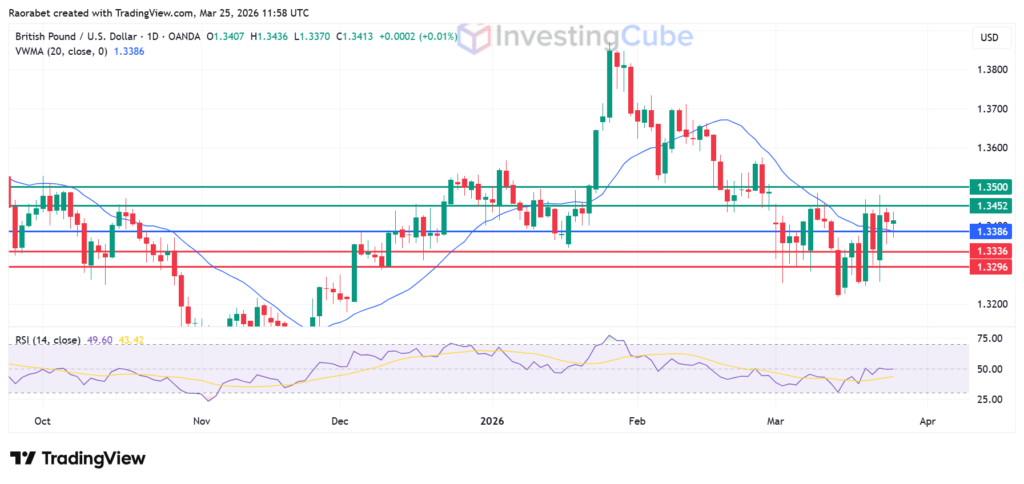
GBP/USD daily chart with the key levels of support and resistance on March 25, 2026. Created on TradingView
The volatility was sparked by a double hawkish surprise. Both the Fed and the BoE held rates steady but warned of higher inflation due to Middle East tensions, causing traders to rapidly exit short-term positions.
The biggest risk is policy divergence. If one central bank starts cutting rates while the other is still hiking, the resulting interest rate differential could cause substantial pip swings in a matter of days.
Yes, by stabilising oil and easing inflation pressure. However, structural UK vulnerabilities may limit gains more than consensus expects in a higher-for-longer rate environment.