


- Rising crude oil prices have exposed the UK economy to external shocks, and the the mood has shifted from rate cuts to rate hikes
- Higher UK interest rates mean the pound is more attractive than the US dollar
- Supply disruptions along the Strait of Hormuz seem to be easing, further favouring the GBP
In a global market where geopolitical tension usually translates to increased demand for US Dollars, the British Pound’s recent resilience has been a fascinating outlier. Over the last month, while most major currencies retreated under the shadow of the Middle East conflict, the Pound (GBP) didn’t just hold its ground against the Greenback. It staged a quiet rally, climbing more than 2.3% from its recent lows.
How the War Flipped the BoE’s Rate Script and Boosted Sterling
The conflict in Iran brought about a change that most currency experts did not see coming. By dramatically changing the Bank of England’s (BoE) rate expectations, it made the pound more appealing, not less. Two weeks ago, traders thought that the Bank of England would cut rates three times in 2026. By the middle of March, those hopes had changed to a 70% chance of a rate hike by the end of the year. That means that in two weeks, the expected policy direction could change by about 100 basis points.
It’s easy to see why. Oil prices over $100 make UK energy costs and CPI go up, which makes it harder for the BoE to cut. Higher UK interest rates for a longer time make assets denominated in sterling more appealing to investors looking for yield, which helps the pound.
Additionally, emerging signs of easing tensions have tempered concerns over the UK’s energy exposure. Moderating oil prices have narrowed the policy gap between the BoE and the US Federal Reserve, challenging the view that conflict-related uncertainty will indefinitely favor the US Dollar. When supply disruptions fade faster than expected, the UK’s energy sensitivity can actually become advantageous.
Is a Reversal Viable?
A reversal toward renewed dollar strength could materialise quickly if the conflict reignites or oil prices spike again, reviving safe-haven demand. If US growth numbers surprise on the upside, or worries about inflation come back into view, that too can tip things in favour of the greenback.

GBP/USD Forecast
The GBP/USD RSI is currently at 41.32, suggesting the pair is no longer oversold but lacks the aggressive buying pressure needed for a breakout. Immediate support lies around 1.3247, with a key psychological and technical floor at 1.3189. On the upside, overcoming resistance near the 20-day EMA at 1.3407 would be necessary, with a clear break above 100-day EMA at 1.3441 needed to confirm a change from a corrective phase to a bullish trend in the medium term.
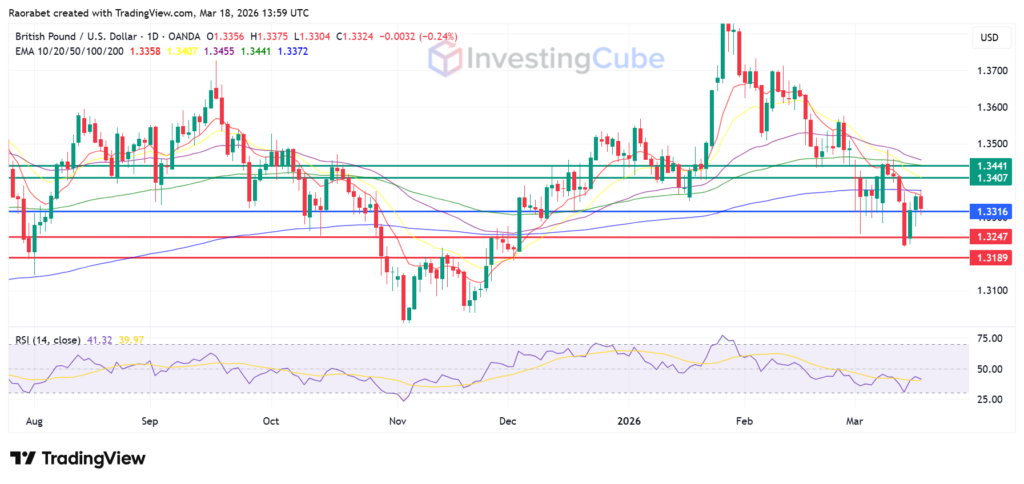
GBP/USD daily chart with key levels of resistance and support on the daily chart on March 18, 2026. Created on TradingView
Surging energy prices have forced investors to abandon hopes of a Bank of England rate cut. The expectation of higher-for-longer interest rates in the UK has made the Pound more attractive to yield-seeking investors.
A reduction in Middle East tensions or a significant decline in oil prices would ease inflation expectations in the UK. Should the BoE then indicate a shift toward easing monetary policy to support slower growth, the Pound could weaken rapidly.
No. US economic data, including retail sales and employment, remains generally stronger. Interest rate differences and inflation concerns driven by energy prices are the main reasons why the pound is so strong right now, not because the UK economy is growing.