


- Ola Electric share price has risen by more than 50% in the last five sessions, and its fundamentals remain strong
- News of lithium iron phosphate production has boosted investor confidence because it could cut costs and reduce pressure on margins
- Key risks include execution challenges, intensifying competition from Bajaj Auto, TVS, and Hero MotoCorp and potential changes in government incentives
After facing a prolonged period of declining visibility, Ola Electric shares (OLAELEC) have recently seen a notable resurgence. Observers tracking the stock this week will have noticed a sharp upward trend that resembles a steep climb rather than a gradual recovery. Over five trading sessions, the stock rose by more than 50%, highlighted by a 20% jump on Thursday.
What Is Driving the Rally?
This rally largely stems from strong March 2026 sales figures. Ola reported over 10,000 vehicle registrations for the month, representing a 150% increase compared to the previous month and surpassing a cumulative total of 1 million registrations as per VAHAN portal data.
Orders have consistently exceeded 1,000 units per day in the last week, indicating growing consumer interest in new models and service improvements. Company management emphasized that over 80% of vehicles receive same-day servicing, a factor contributing to rebuilding trust after previous quality issues.
Is Ola Beating the Legacy Trap?
Ola Electric share price rallied 20% on Thursday after news broke of their self-made lithium iron phosphate (LIP) batteries reaching full production stage. According to reports from Economic Times, building these cells internally marks a turning point. Cost cuts are now a reality and margin losses may slow as a result.
The market consensus is currently obsessed with Legacy OEM dominance. Some analysts say TVS and Bajaj are ahead thanks to their widespread service centres. Yet it could be said they’re really just leaning on existing setups, not innovation.
Is the Momentum Sustainable?
Competition remains fierce, but Ola’s emphasis on premium vehicles and its growing charging and service ecosystem offer advantages over rivals. This approach challenges assumptions that price competition and subsidy cuts will limit growth in the EV sector. Ola’s capacity to maintain stronger pricing power and foster customer loyalty could support more consistent margins than many anticipate.

The current direction appears sustainable in the short term, provided delivery volumes and service quality keep improving. That said, risks such as intensified competition from Bajaj Auto, TVS, and Hero MotoCorp, possible shifts in government policy, and challenges in scaling production may affect future performance. Additionally, recent rapid gains have pushed valuations higher, leaving less room for setbacks.
Ola Electric Share Price Forecast
Ola Electric share price pivots at ₹36.37, with primary resistance likely at the psychological round figure ₹40. Moving past that could create the next barrier at ₹42. The RSI at 79.16 shows oversold conditions, and immediate support is now established at ₹35.15. The second support will likely be at ₹34.
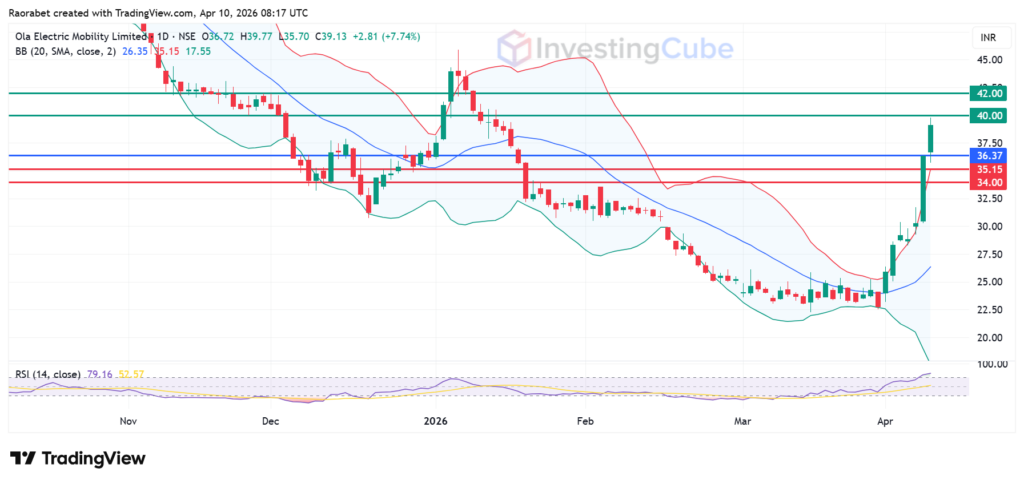
Ola Electric share price performance on the daily chart with the key support and resistance levels for April 10, 2026. Created on TradingView
The jump reflects confirmation that Ola’s LFP battery cells have reached production readiness. This advancement is expected to reduce manufacturing expenses substantially, providing a clearer route to profitability that the company lacked previously.
The momentum sustainability looks possible near-term if delivery trends and service quality hold. However, ongoing competitive pressures and fluctuations in government incentives present uncertainties. The prevailing market view might overstate the durability of gains without steady improvement in margins.
The primary risk is execution. Ola must successfully transition its entire lineup to its own battery cells without further service glitches. If the Gigafactory ramp-up faces delays, the current rally could evaporate.