
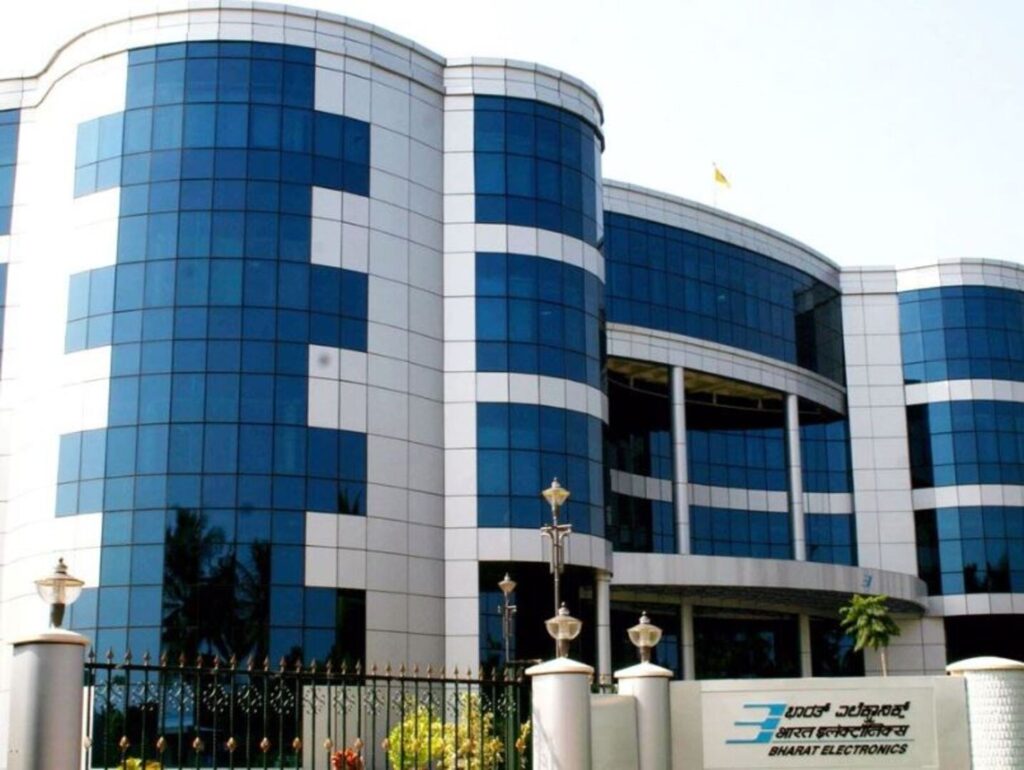
- BEL’s revenue surged 25% year-on-year to ₹5,533 crore in Q1 FY27, but operating margins shrank due to rising raw material costs
- The recent stock decline reflects short-term profit-taking over compressed quarterly margins rather than a structural breakdown in core business fundamentals
- BEL retains substantial multi-year revenue visibility, supported by a ₹72,258 crore order book and favorable analyst buy ratings and targets
Bharat Electronics Limited (BEL) has recently experienced increased selling pressure, with its share price declining over 4% in the past month. This dip followed the release of its Q1 FY27 financial results.
The question now is whether the market has overreacted or whether the caution is justified, and whether the current levels present an opportunity given the company’s outlook.
What the Numbers Showed
BEL’s top-line performance for the April-June quarter was quite strong. Revenue from operations jumped 25% year-on-year, reaching ₹5,533 crore, and consolidated net profit grew almost 8% year-on-year to ₹1,048 crore.
BEL share price dropped right away, though, because operating margins shrank. Equitymaster reported that higher input costs, especially a 55.7% year-on-year increase in material expenses, significantly impacted profitability. Operating EBITDA margins narrowed to 25.11%, down from 28% in the same period last fiscal year.
This margin contraction came from a less favorable product mix and higher material costs, even if other expenses offered a partial offset. Both revenue and profit fell sharply compared to the previous March quarter, which had a high base. Still, the order book stayed healthy at ₹72,258 crore as of July 1, 2026.
Furthermore, when compared sequentially to the robust March quarter (Q4 FY26), net profit dropped by over 52%, reflecting typical seasonality in defense sector delivery schedules.
BEL has maintained its full-year revenue growth forecast at 15%, with an expected EBITDA margin of 28%. The company anticipates order inflows exceeding ₹55,000 crore for the year, partly driven by the QRSAM program. Significant investments in research and development and capital expenditures are also planned.
Why Investors Sold
The market’s reaction makes sense at first glance. Margins missed street expectations, and the quarter-over-quarter drop highlighted how lumpy defense execution can be. Order inflows for the quarter itself were modest, and the order book came in a bit below some estimates.
Defense stocks already had high valuations, and BEL trades at high multiples. Any hint of near-term pressure quickly leads to profit-taking. Broader sector caution and high valuations amplified the move.
Yet, the longer-term outlook remains positive. Defense makes up about 90% of BEL’s business, and India’s modernization efforts keep generating a large pipeline of platforms for the Army, Navy, and Air Force. Indigenization and rising exports provide further growth. Receivables improved noticeably, signaling better cash conversion.
Are the Declines Justified, and Is There Opportunity?
The current stock decline may reflect a short-term focus on quarterly results while overlooking the company’s multi-year operational visibility. Major brokerage firms generally maintain positive ratings on BEL.
Motilal Oswal has a Buy rating with a target price of ₹530, indicating potential upside based on the company’s guidance and anticipated large orders. Nuvama has reiterated its Buy rating at ₹485, citing execution in air defense programs and planned upgrades. Nomura holds a constructive outlook with a target of ₹454. Other analysts from firms like Jefferies, Goldman Sachs, and CLSA also foresee significant potential upside.
For investors with a medium-term outlook who can look beyond a single soft quarter, the current stock price may offer a more attractive entry point compared to earlier in the year. This would depend on closely monitoring the timing of significant order awards, such as QRSAM, and the company’s consistent operational execution.
BEL’s share price fell because operating EBITDA margins contracted to 25.11% due to a 55.7% increase in raw material costs, overshadowing strong revenue growth.
The order book stands at ₹72,258 crore as of 1 July 2026, offering multi-year revenue visibility and supporting management’s 15% growth guidance for the full year amid a robust defence pipeline.
For medium-term investors, the more than 4% monthly drop may present an entry point if they accept quarterly volatility, given the strong order pipeline and reiterated full-year margin and growth targets.