
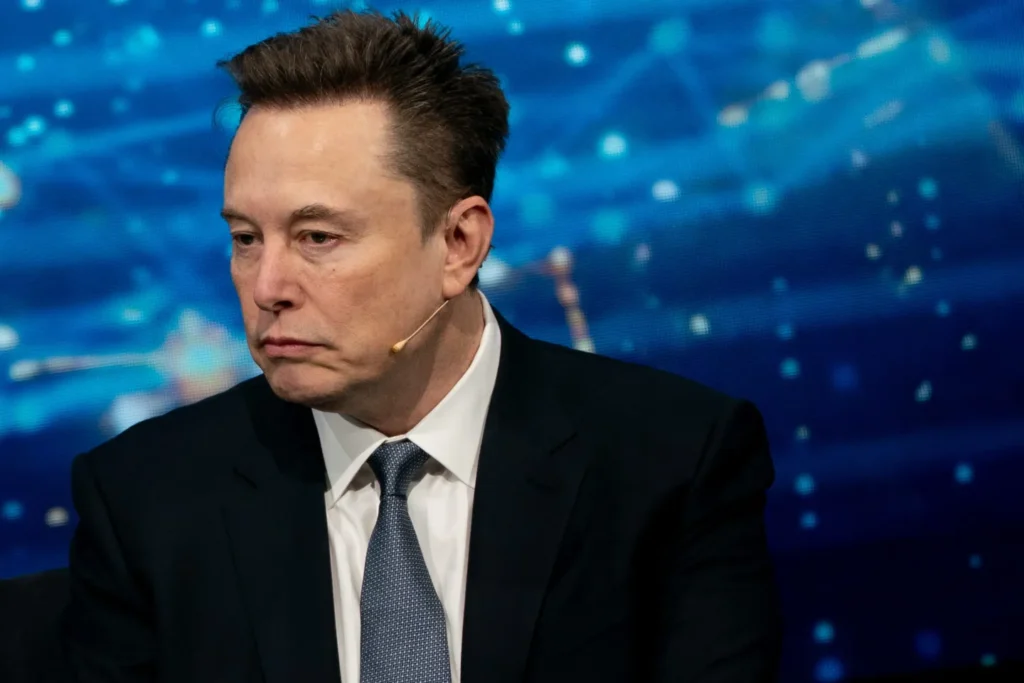
- Elon Musk says artificial intelligence and robotics could make goods and services so abundant that money may become far less important by 2036.
- The Tesla and xAI CEO argues deflation, rather than inflation, could become the biggest economic challenge in an AI-driven world.
- Musk believes governments may eventually provide direct financial support as AI reshapes employment and productivity.
Tesla (NASDAQ: TSLA) CEO Elon Musk believes artificial intelligence could fundamentally transform the global economy within the next decade, arguing that traditional ideas about money, inflation and work may no longer apply if AI dramatically increases the supply of goods and services.
Speaking during an interview with The Economist Editor-in-Chief Zanny Minton Beddoes, Musk said money derives its value from scarcity. If artificial intelligence and robotics eventually produce more goods and services than people can consume, he argued, money itself could become significantly less important.
His comments add to a growing debate over how AI will reshape global economies as businesses accelerate investment in automation and machine intelligence.
Why Does Elon Musk Think Money May Not Matter by 2036?
Musk argued that money is ultimately a mechanism for exchanging scarce goods and services.
If robots and AI are providing more goods and services than any human could possibly consume, what do you need money for?”
Said Musk
According to Musk, rapid advances in artificial intelligence could create an economy where production becomes so abundant that traditional economic constraints begin to disappear.
Rather than limiting prosperity through scarce resources, he believes AI-powered automation could dramatically increase global output while reducing production costs across multiple industries.
His prediction assumes that advances in robotics and artificial intelligence continue accelerating over the next decade.
Elon Musk Says AI Could Make Deflation a Bigger Risk Than Inflation
One of Musk’s most controversial predictions concerns inflation. While many economists warn that expanding the money supply risks higher inflation, Musk argued that the equation changes if artificial intelligence dramatically increases the availability of goods and services.
If the output of goods and services increases dramatically, you can create money in the database,”
Added Mr Musk
Instead of inflation becoming the dominant economic challenge, Musk predicted that deflation could emerge as the greater long-term risk if technological progress significantly outpaces consumer demand. His comments reflect the idea that prices naturally fall when productivity rises faster than spending.
Could Governments Pay People in an AI Economy?
The interview also explored how governments might respond to widespread AI-driven job displacement. When asked how societies could support workers displaced by automation, Musk suggested governments could simply provide direct financial assistance.
I think the Treasury should just simply issue people checks,”
he said.
Beddoes challenged the proposal, arguing that creating money on such a scale could destabilize economies and widen political divisions. She also questioned how governments would navigate rising unemployment, inequality and growing public anxiety as AI becomes increasingly capable of replacing human labor.
The exchange highlighted one of the biggest unanswered questions surrounding artificial intelligence: whether technological progress will create enough new opportunities to offset jobs lost to automation.
Elon Musk Remains Divided Over AI’s Future
Despite his optimism about AI’s economic potential, Musk admitted he remains deeply conflicted about the technology. He said his outlook regularly shifts between excitement and concern depending on how rapidly artificial intelligence continues advancing.
“Honestly, if you ask me on any given day, even intraday, I’ve gone from exhilaration to terror regarding AI,”
Musk said.
The billionaire has repeatedly argued that AI development is unlikely to be stopped and that governments and technology companies should instead focus on ensuring it develops safely. He also reiterated his prediction that artificial intelligence could surpass the combined intelligence of all humans within roughly five years.
What Musk’s AI Predictions Mean for the Global Economy
Whether or not Musk’s timeline proves accurate, his comments reflect a broader debate taking place across governments, businesses and financial markets.
Artificial intelligence is already reshaping industries ranging from manufacturing and software development to healthcare and finance. The next phase of AI adoption could determine not only how companies operate but also how governments approach employment, taxation and economic policy.
While Musk believes AI could ultimately create an era of unprecedented abundance, economists continue to debate whether societies can successfully navigate the transition without significant disruption to labor markets and wealth distribution.
For investors, policymakers and businesses alike, the conversation increasingly centers not on whether AI will transform the global economy, but how quickly that transformation will occur.
Elon Musk said artificial intelligence and robotics could eventually make goods and services so abundant that money becomes far less important. He believes AI-driven productivity could fundamentally reshape how the global economy functions.
Musk argues that if artificial intelligence dramatically increases the production of goods and services, supply could outpace demand, causing prices to fall. In that scenario, deflation would become a bigger economic challenge than inflation.
Musk predicts that artificial intelligence could surpass the combined intelligence of all humans within about five years and radically transform the global economy by 2036 through automation, robotics and unprecedented productivity gains.