
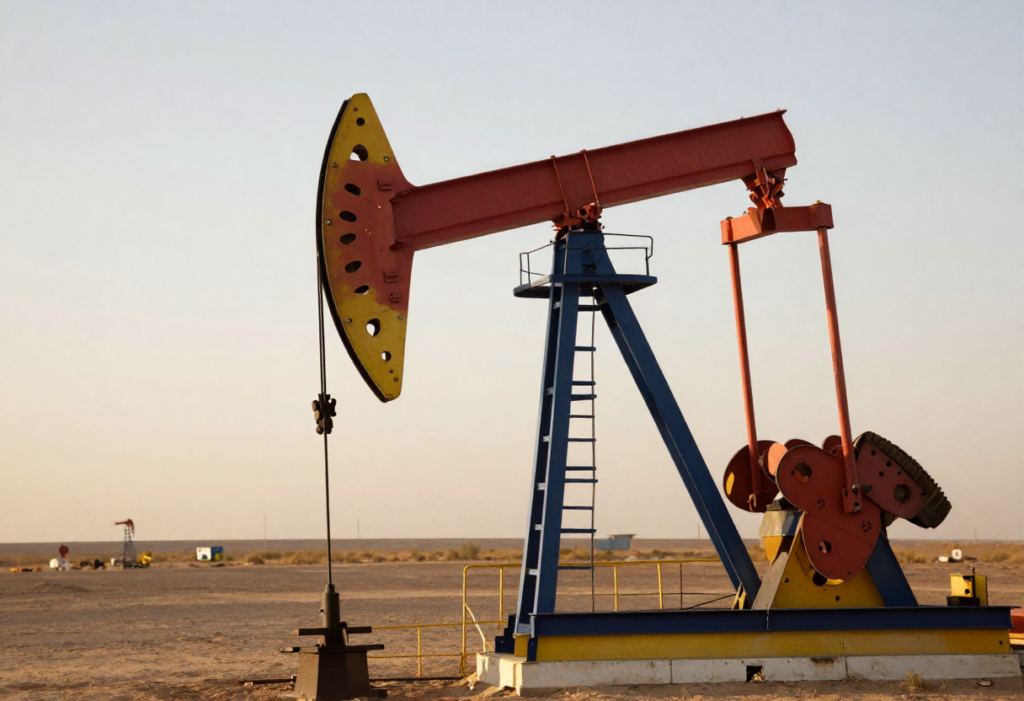
- De-escalation between the U.S. and Iran unwound the geopolitical risk premium, driving Brent crude down before stabilizing near $79 per barrel
- The market is shifting toward surplus later in 2026 as production recovers, supporting a mild bearish bias despite near-term volatility risks
- Investors can access oil via futures ETFs, equity funds such as XLE, or producer stocks, while monitoring geopolitics and inventory data closely
Crude oil prices have experienced a downward trend since the end of July. This has been attributed to markets pricing in a de-escalation of tensions between the United States and Iran. As rhetoric around potential conflict has softened and shipping activity through critical routes has shown signs of improvement, concerns about supply disruptions have diminished.
Yet Brent crude rose nearly 1% in the prior session and edged up about 0.3% in early trading today, prompting questions about whether the decline is losing momentum.
De-Escalation Unwinds the Geopolitical Risk Premium
The primary factor driving the significant price drop in late July and early August was a notable shift in international news. Oil prices fell sharply after U.S. authorities postponed planned strikes against Iranian targets and indicated that discussions regarding maritime passage through the Strait of Hormuz were being reopened.
Energy analysts at Rigzone have noted that much of the price increase over the summer was due to geopolitical risk premiums, rather than actual structural deficits in supply. As markets gained confidence in open diplomatic channels and potential agreements on shipping routes, the fear-driven premium began to decline.
The Bigger Picture Still Looks Heavy
Here’s where it gets less exciting for anyone hoping for a sustained rally. Despite the recent uptick, the overall outlook for oil prices remains subdued. Brent crude is still down approximately 10% over the last five trading sessions. Furthermore, the broader supply landscape has not improved.
OPEC+ has been steadily unwinding its production cuts, adding output through the summer. Both OPEC and the IEA have warned of a sizeable global supply surplus building through 2026.
Goldman Sachs says Brent could moderate toward $80 by year-end if the Strait of Hormuz fully reopens. But the bank also cautioned that Red Sea disruptions or fresh attacks on Saudi energy infrastructure could reintroduce upside risk at any point.
Geopolitical risk hasn’t vanished. Analysts note that full normalization of Gulf flows could still face delays, and any renewed flare-up would quickly reverse the recent softness.
On the demand side, resilient U.S. consumption offers some support. But weaker non-OECD growth, particularly in China, limits the upside.
In other words, with more barrels coming to market and demand growth that both agencies see as fairly soft, the structural backdrop suggests prices will stay lower and range-bound instead of breaking out.
Where Can Investors Look?
For investors navigating the current energy market, it is important to differentiate between short-term market fluctuations and medium-term structural supply factors.
Those seeking exposure to the energy sector without making a direct bet on crude oil prices might consider diversified energy funds. Options such as the Energy Select Sector SPDR (XLE) or Vanguard Energy ETF (VDE) offer exposure across various segments. This gives them a piece of the action across segments like producers, pipeline operators, and refiners, thereby spreading risk beyond crude oil price movements alone.
Refiners are another option. They sometimes do well from crack-spread volatility even when crude prices aren’t moving much. For those willing to take on more risk, upstream producers are worth watching. Their prices usually shift more dramatically, up or down, with crude.
Calmer US-Iran rhetoric eased fears of supply disruptions. This helped markets factor in recovering Middle East production and smoother shipping through important routes.
Not yet. That rise shows lingering caution and short-covering, not a clear fundamental shift, especially with inventory builds expected later.
Diversified energy ETFs, such as XLE or VDE, can spread risk throughout the sector. This avoids betting directly on crude’s next price swing.